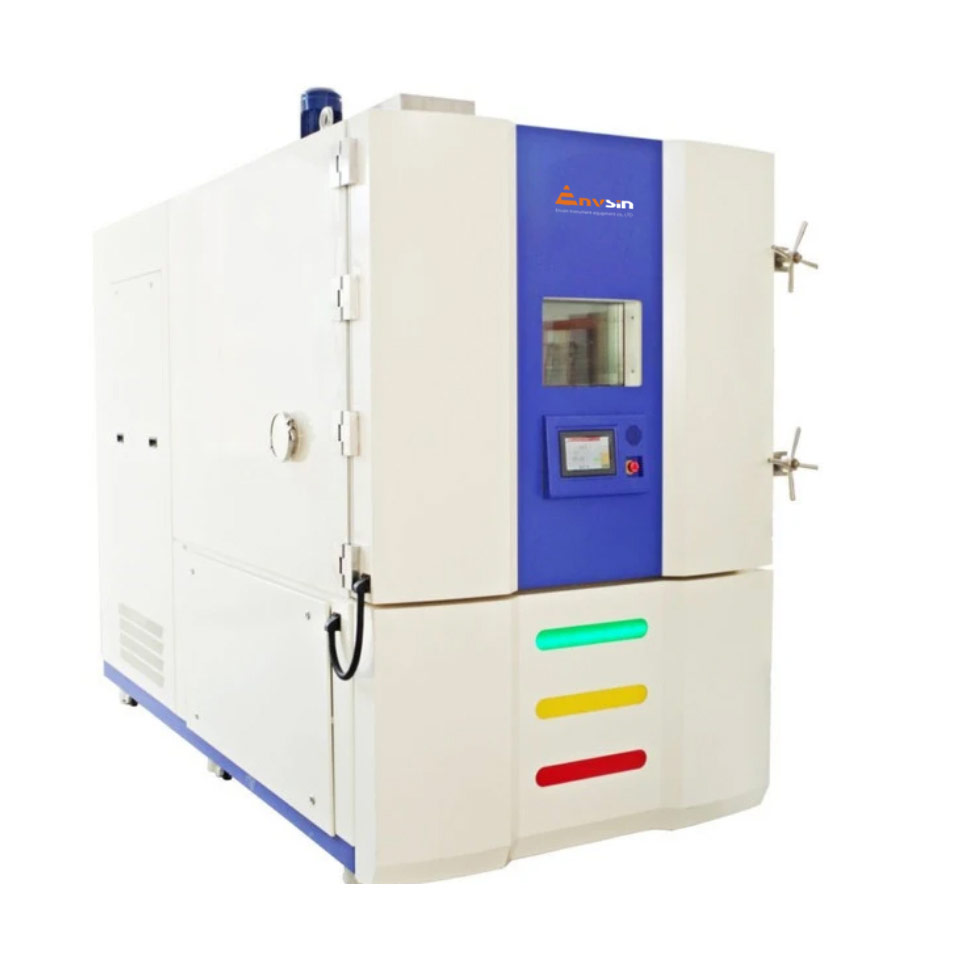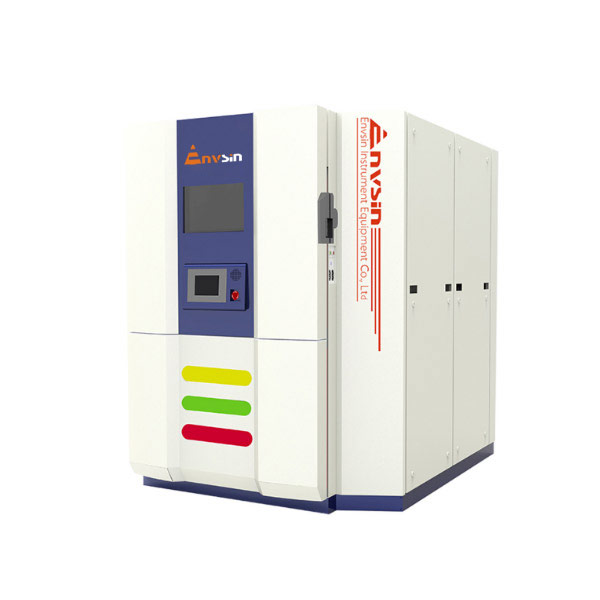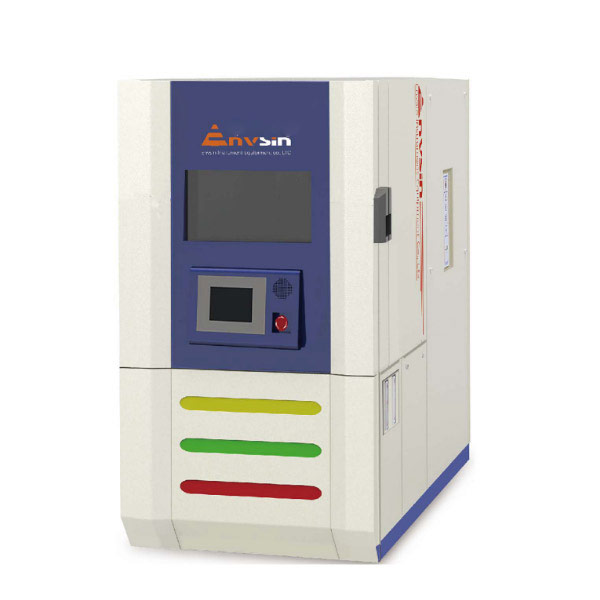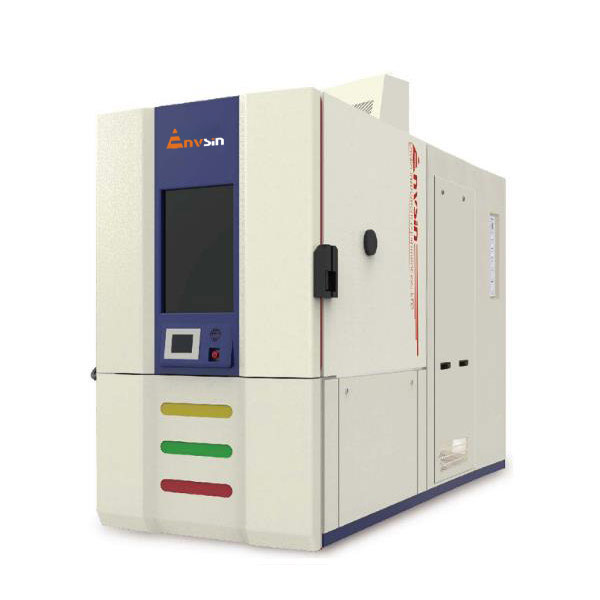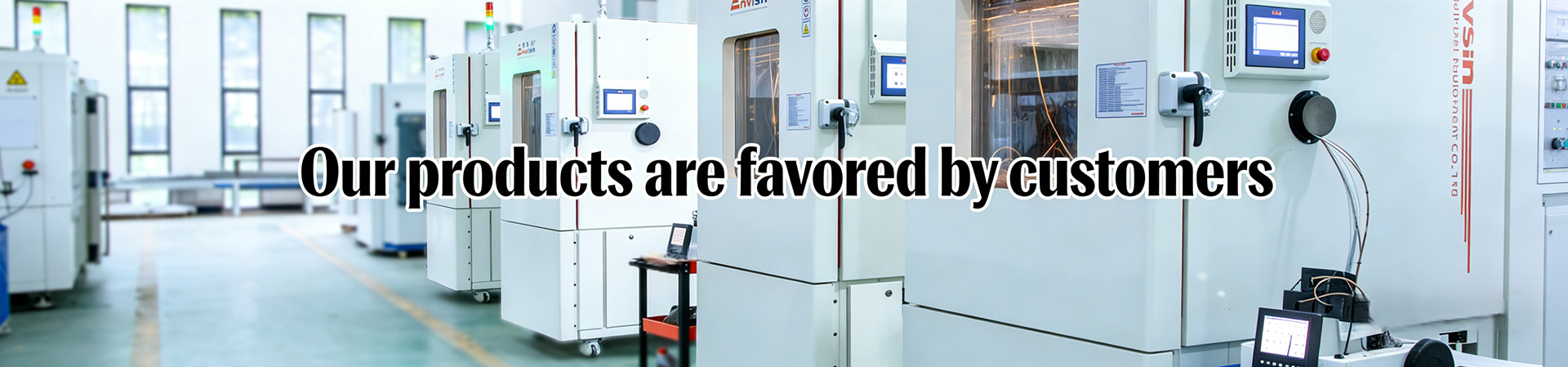
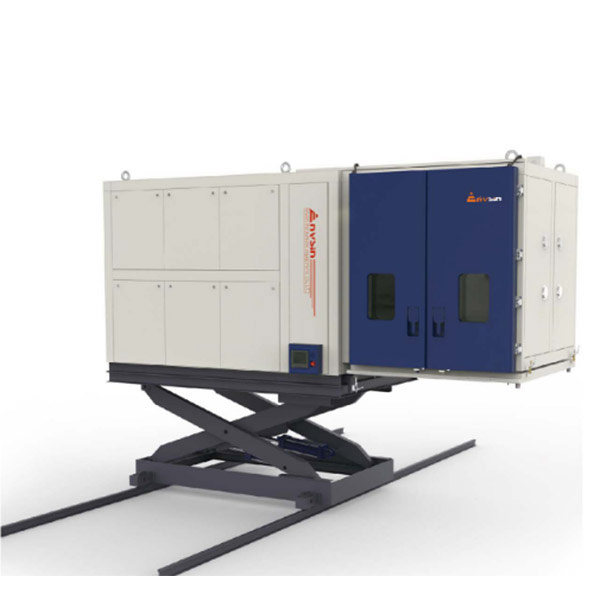
The rapid temperature change test chamber is a device used to simulate environments with rapid temperature changes, widely used in fields such as electronics, electrical, automotive, aerospace, etc., to test the performance and reliability of products under extreme temperature conditions.
Główne funkcje:
1. Rapid temperature changes: capable of achieving significant temperature fluctuations in a short period of time.
2. Precise control: Equipped with a precise temperature control system to ensure stability and uniformity during temperature changes.
3. Programming function: Multiple temperature change curves and cyclic programs can be pre-set to meet different testing needs.
4. Data recording and monitoring: Equipped with advanced data recording and monitoring systems, real-time temperature change data is recorded for subsequent analysis and troubleshooting.
Parametry produktu
| Parametr | Specification |
|---|---|
| Objętość testowa | 3300 Liters |
| Wymiary komory (szer. × głęb. × wys.) | 1500 mm × 1500 mm × 1500 mm |
| Wymiary całkowite (szer. × głęb. × wys.) | 5000 mm × 1960 mm × 2800 mm |
| Zasilanie | AC380V ±10%, 50Hz ±1, 3-phase 4-wire + grounding (3/N/PE), rezystancja uziemienia <4Ω |
| Maks. Moc systemu | Approx. 123.8 kW (subject to final engineering design) |
| Maks. Prąd systemu | Około 212,3 A (z zastrzeżeniem ostatecznego projektu technicznego) |
| Metoda chłodzenia | Typ chłodzony wodą |
| Zakres temperatur | -72℃ ~ +150℃ |
| Równomierność temperatury | ≤2℃ |
| Wahania temperatury | ±0.5℃ |
| Odchylenie temperatury | ±2℃ |
| Szybkość ogrzewania | 5℃/min (linear within -55℃ ~ +125℃ range) |
| Szybkość chłodzenia | 5℃/min (linear within -55℃ ~ +125℃ range) |
| Zakres kontroli temperatury | +10℃ ~ +90℃ |
| Zakres wilgotności | 10%RH ~ 98%RH (±3%RH) |
| Równomierność wilgotności | ±5,0%RH |
| Humidity Fluctuation | ±3,0%RH |
| Odchylenie wilgotności | +2% ~ -3% (>75%RH) |
Obowiązujące normy testowe |
• GB/T 2423.1 – Low temperature test method • GB/T 2423.2 – High temperature test method • GB/T 2423.22 – Temperature change test method • GB/T 2423.34 – Damp heat cyclic test method • GB 150.3 – High temperature test • GB 150.4 – Low temperature test • GB 150.9 – Damp heat test • IEC60068-2 – Temperature test methods • MIL-STD-202G-103B – Humidity test • GB899A – Ship & submarine test profiles |
Cechy produktu
1. The industry’s first rapid temperature change test chamber has a temperature change rate of 3-30 ℃/min and 10-40 ℃/min
2. Rapid temperature change test chamber speed: 5 ℃/min to 20 ℃/min, linearly and nonlinearly adjustable
3. Color screen, 32-bit control system Ethernet E-management, USB data access function, APP mobile platform management
7. Programowalne zasilanie obciążenia z 4-kanałową kontrolą wyjścia ON/OFF, chroniące bezpieczeństwo testowanego produktu i sprzętu.
5. Specially designed dry air blowing to protect the surface condensation of the test sample during rapid temperature changes
8. Opatentowana konstrukcja unikalnego systemu cyrkulacji powietrza zapewnia precyzję testowanego produktu.
7. The anti condensation function and over temperature, windless, and smoke protection of the independent test sample
8. Unique operating mode design, after the experiment is completed, the box returns to room temperature to protect the state of the test object
9. Najbardziej przyjazna dla środowiska kontrola przepływu chłodzenia, oszczędność energii i szybki wzrost i spadek temperatury
15. Automatyczne przypominanie o czasie konserwacji urządzeń systemu sterowania i funkcja projektowania oprogramowania dla dokumentacji medycznej błędów.
Scenariusze zastosowań
1. Electronics and semiconductor industry:
Electronic component testing: Evaluating the reliability and durability of electronic components (such as chips, capacitors, resistors, sensors, etc.) under rapid temperature changes.
Circuit board testing: Testing the performance and solder joint reliability of printed circuit boards (PCBs) under rapid temperature changes to ensure their stability in practical use.
2. Przemysł motoryzacyjny:
Automotive component testing: Evaluating the durability and stability of automotive components (such as engine parts, electronic control units, lighting fixtures, etc.) under rapid temperature changes.
Vehicle testing: testing the performance of the vehicle under extreme temperature changes, evaluating the adaptability and reliability of the vehicle under different climate conditions.
3. Lotnictwo i kosmonautyka:
Aircraft component testing: Evaluating the performance of aircraft components (such as onboard electronic equipment, sensors, structural materials, etc.) under rapid temperature changes to ensure their reliability in high-altitude and extreme weather environments.
Spacecraft material testing: testing the stability and durability of spacecraft materials under rapid temperature changes in the space environment.
4. Communication industry:
Communication equipment testing: Evaluate the performance and reliability of communication equipment (such as routers, base stations, fiber optic equipment, etc.) under rapid temperature changes, ensuring their stable operation under various environmental conditions.
Fiber optic and connector testing: Testing the durability and connection performance of fibers and connectors under rapid temperature changes.
5. Home appliances and consumer electronics:
Home appliance testing: Evaluate the performance and durability of home appliances (such as refrigerators, washing machines, air conditioners, etc.) under rapid temperature changes to ensure their stability under different climatic conditions.
Consumer electronics product testing: Testing the reliability and durability of consumer electronics products (such as smartphones, tablets, wearable devices, etc.) under rapid temperature changes.
6. Farmaceutyka i biotechnologia:
Drug stability testing: Evaluating the stability and effectiveness of drugs under rapid temperature changes to ensure their quality during storage and transportation.
Biological product testing: Testing the stability and activity of biological products (such as vaccines, diagnostic reagents, etc.) under rapid temperature changes.
7. Materials Science:
New material research: Evaluate the physical and chemical properties of new materials under rapid temperature changes to ensure their stability in practical applications.
Composite material testing: testing the strength and durability of composite materials under rapid temperature changes, and evaluating their reliability in various engineering applications.