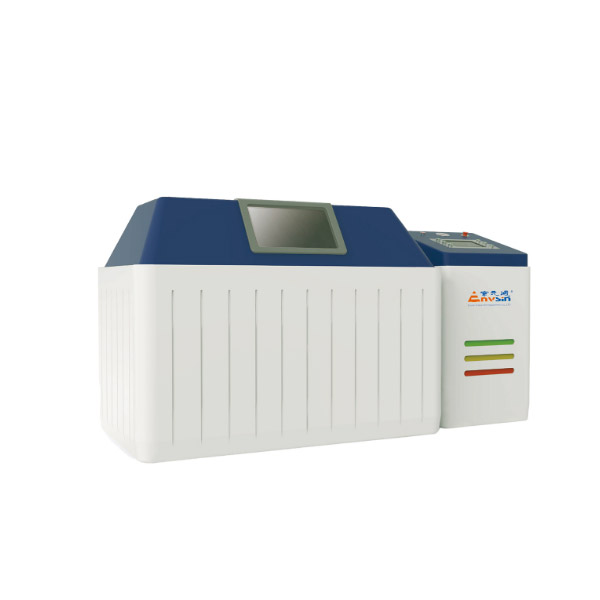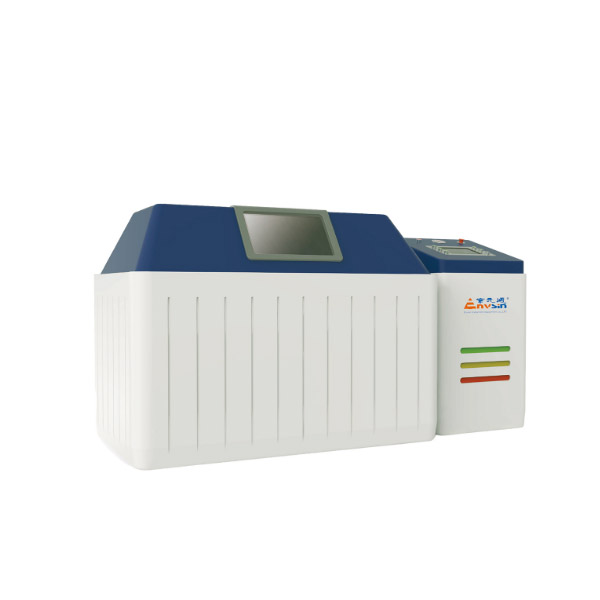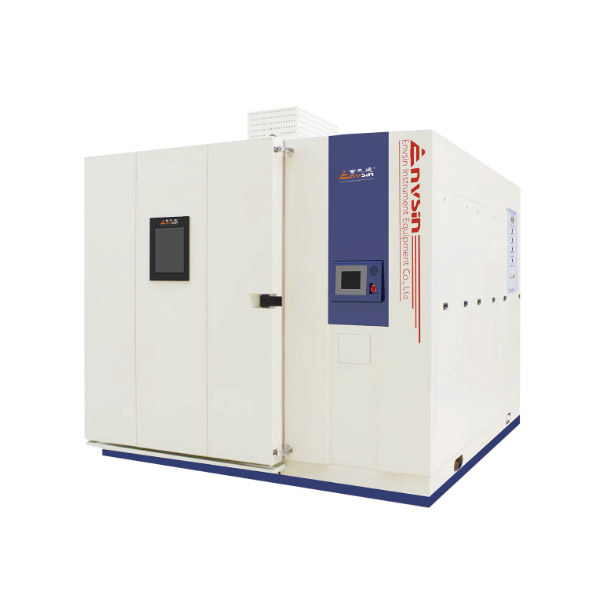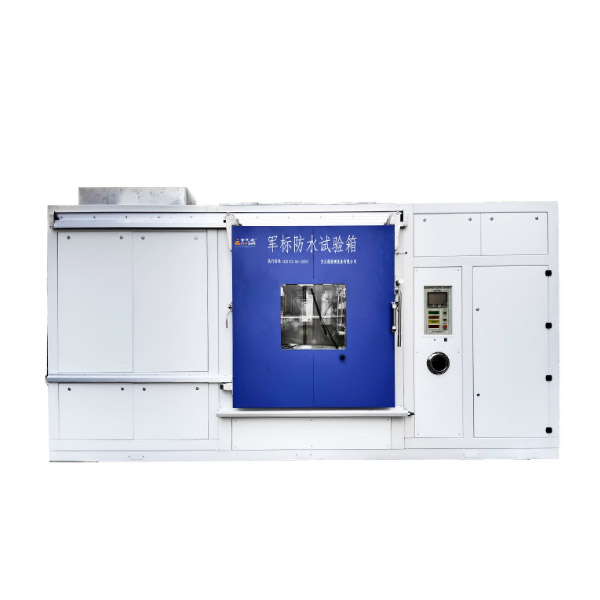
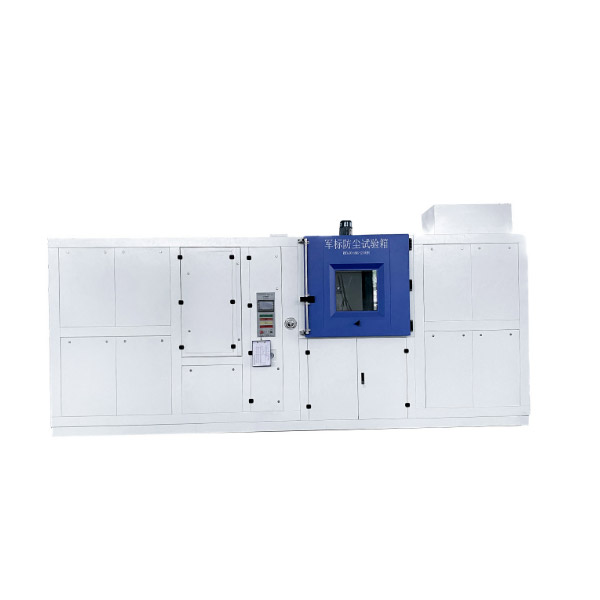
The dust test chamber mainly includes a dust blowing test unit and auxiliary equipment for controlling the dust settling rate, wind speed, temperature, and humidity of the air. Calibrated instruments are used to maintain and check the dust settling rate of the circulating dust within the test chamber. The airflow entering the test chamber to impact the specimen should be as close to laminar flow as possible, or at least prevent the formation of eddies. This experimental system is suitable for conducting dust blowing tests on specimens.
The military-standard dust blowing/sand blowing/dust settling test chamber mainly includes a dust blowing test unit and auxiliary equipment for controlling the dust settling amount, wind speed, temperature, and humidity of the air. The dust settling amount of circulating dust within the test chamber is maintained and checked using calibrated instruments. The airflow entering the test chamber to impact the specimen should be as close to laminar flow as possible, or at least prevent the formation of eddies. This experimental system is suitable for conducting dust blowing tests on specimens.
Product Parameters
| Parameter | Specification / Value |
|---|---|
| Chamber Volume | 3375 L |
| Internal Dimensions (W × D × H) | 1500 mm × 1500 mm × 1500 mm |
| External Dimensions (W × D × H) | Approx. 4800 mm × 2000 mm × 2450 mm Actual subject to engineering design |
| Power Supply | AC380V ±5%, 50Hz ±1, three-phase four-wire + grounding (3/N/PE), grounding resistance <4Ω |
| Maximum Operating Power | Approx. 42.1 KW (subject to engineering design) |
| Maximum Operating Current | Approx. 72 A (subject to engineering design) |
| Temperature Range | 23°C ~ 80°C |
| Temperature Uniformity | ≤2°C |
| Temperature Fluctuation | ±0.5°C |
| Temperature Deviation | ±2°C |
| Heating / Cooling Rate | ≥1°C/min |
| Dust Fall Amount | 10.6 g/m³ ± 7 g/m³ |
| Dust Blowing Wind Speed | 1.5 ~ 8.9 m/s |
| Test Dust Composition | 97% ~ 99% silica dioxide (quartz sand) |
| Dust Particle Diameter | ≤149 μm |
| Dust Airflow Velocity | 1.5 ~ 8.9 m/s (adjustable, measured at air outlet) |
| Humidity Range | Below 30% RH (throughout the dust test process) |
| Effective Cross-sectional Area (Airflow) | ≥800 mm × 800 mm |
| Turntable Dimensions | ≥Φ700 mm |
| Turntable | Load Capacity: ≥200 kg Rotation Speed: 3 ~ 7 r/min |
| Applicable Standards | GJB 150.12A—2009 Environmental test methods for military material laboratory, Part 12: Dust test |
التطبيقات
1.Automotive Industry
Used to test the sealing performance and protection capability of components such as headlights, instrument panels, engine intake systems, air conditioning systems, onboard electronic control units, electrical dust covers, and steering systems. Such testing effectively prevents failures caused by dust ingress, ensuring vehicle stability and safety in dusty road conditions.
2.Electronics, Electrical Engineering & Telecommunications
Used to test the dust ingress protection levels (e.g., IP5X, IP6X) of products such as mobile phones, routers, cameras, outdoor LED displays, communication base station equipment, outdoor cabinets, low-voltage apparatus, connectors, and household appliances. By simulating dust-laden environments, the test checks the sealing performance of products to prevent dust ingress that could cause short circuits or performance degradation.
3.Military & Aerospace
Used to verify the operational reliability and durability of military equipment (e.g., communication devices, reconnaissance instruments) and aerospace components (e.g., satellite parts, aircraft components) under harsh conditions like deserts and gobi terrains. Such tests strictly follow national military standards (e.g., GJB 150) or international military standards (e.g., MIL-STD-810) to ensure continuous combat capability of equipment and flight safety in extreme dust/sand environments.
4.New Energy Industry
Used to validate the dust-proof performance of critical components such as photovoltaic modules (backsheets, junction boxes), photovoltaic inverters, electric vehicle battery packs and motor controllers, charging piles, wind turbine pitch systems, and energy storage units. As new energy equipment is widely deployed in harsh environments like deserts and gobi regions, the sand/dust test chamber becomes an essential tool for ensuring long-term operational stability and power generation efficiency.
5.Rail Transportation
Used to simulate sand/dust environments that rail transit systems may encounter (especially in arid and sandstorm-prone areas), and to perform dust-proof tests on key components such as train door mechanical structures, braking systems, onboard electronic control systems, signaling equipment, and air conditioning/ventilation systems. These tests evaluate the durability, reliability, and sealing performance of equipment under dusty conditions, ensuring traffic safety and operational efficiency.
6.Industrial Equipment & Outdoor Products
Used to inspect the dust-sealing performance of industrial controllers, distribution cabinets, outdoor lighting fixtures (e.g., streetlights, tunnel lights), locks, seals, electrical meters, and other products. This ensures that equipment exposed to outdoor environments for long periods can effectively prevent dust ingress and maintain normal function and service life.
7.Materials R&D
Used to evaluate the wear resistance, aging resistance, and corrosion resistance of new coatings, sealing materials, composite materials, etc., under windblown sand erosion. This provides key data support for materials science research and product design optimization.