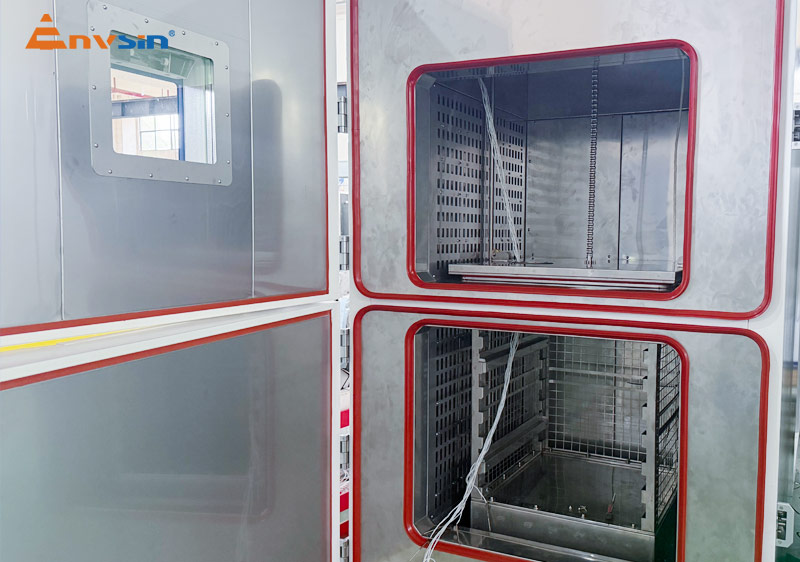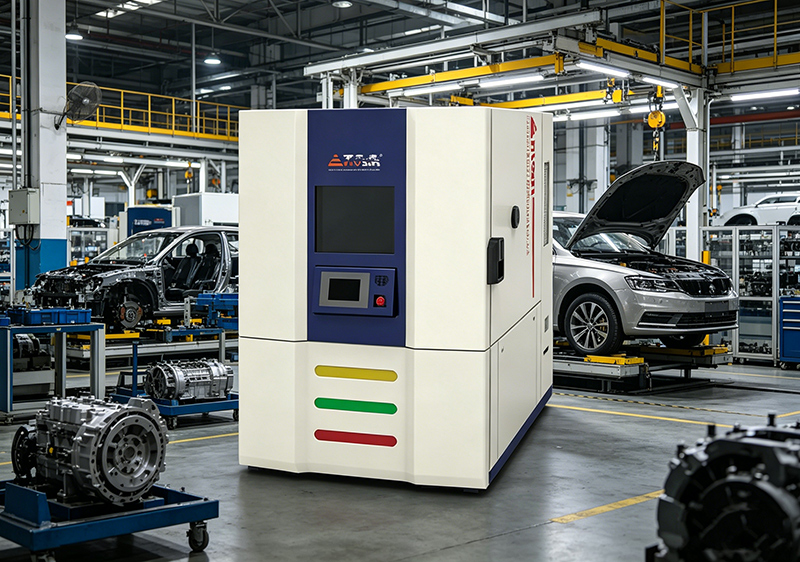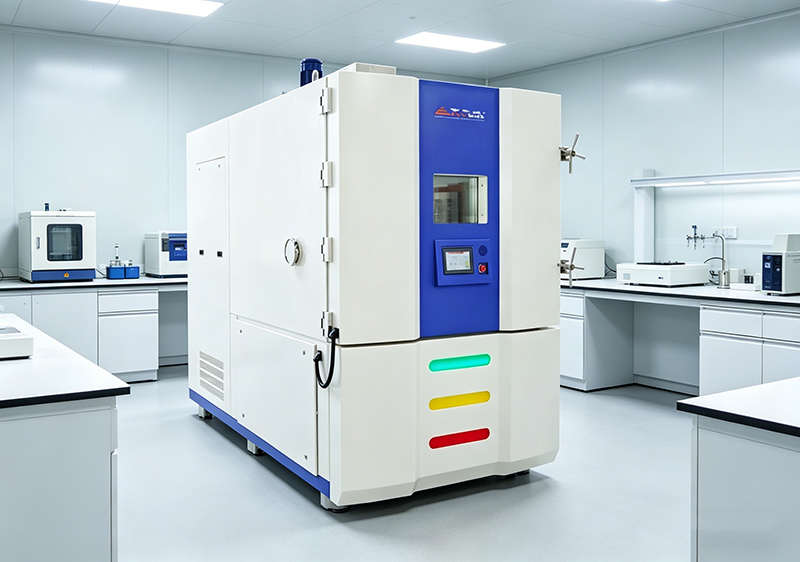








Walk-in or benchtop? For test labs, choosing the wrong environmental chamber can drain budgets, waste floor space, and skew validation results. Whether you’re qualifying EV batteries, PCBs, or medical devices, these 7 critical differences between walk-in chambers and benchtop chambers will help you decide with confidence.
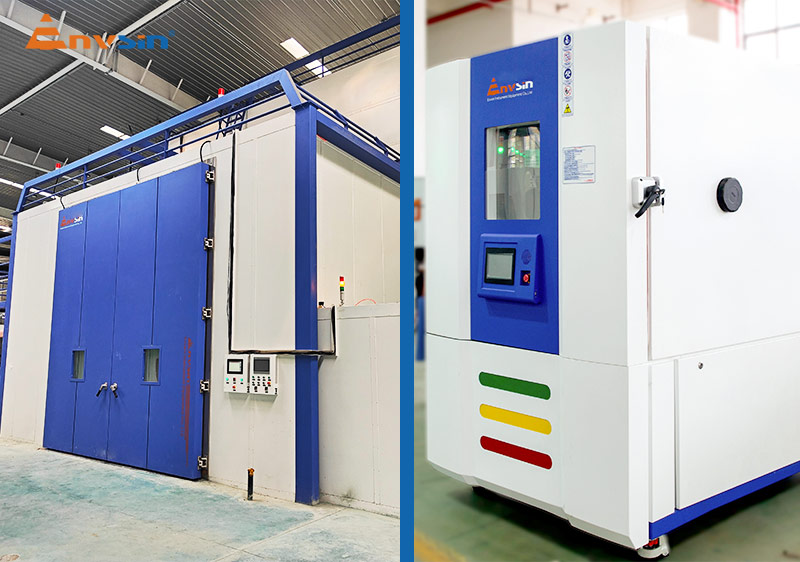
DIFFERENCE 1:Physical Footprint & Lab Space
Walk-in chambers are room-sized structures that demand dedicated floor area, reinforced doors, and often facility modifications. Benchtop chambers are compact units that fit on any standard lab bench or cart — ideal for tight labs or shared workspaces.
DIFFERENCE 2:Sample Size & Load Capacity
Walk-in chambers accommodate oversized products (automotive battery packs, server racks, palletized goods) or high-volume batches of hundreds of components. Benchtop chambers handle smaller samples like sensors, PCB assemblies, and medical cartridges — typically under 3 cubic feet.
DIFFERENCE 3:Temperature/Humidity Performance
Benchtop chambers usually achieve wider extreme ranges (-70°C to +180°C) and faster ramp rates due to smaller air volume. Walk-in chambers prioritize temperature uniformity and stability across large spaces, but may have slower transition speeds unless engineered with high-performance air circulation.
DIFFERENCE 4:Testing Throughput & Volume
Walk-in chambers excel at high-volume production validation, allowing simultaneous testing of hundreds of units per cycle. Benchtop chambers are best for low-volume R&D, prototype qualification, or failure analysis where batch sizes are small and flexibility matters.
DIFFERENCE 5:Installation & Capital Costs
Walk-in chambers require expensive infrastructure: reinforced flooring, HVAC adjustments, electrical upgrades, and professional rigging — total investment often exceeds $50k–$100k. Benchtop chambers are truly plug-and-play, needing only a standard outlet, with prices typically under $10k–$15k.
DIFFERENCE 6:Energy Consumption & Operational Efficiency
Walk-in chambers consume substantially more electricity, especially during thermal cycling across large air masses — raising monthly utility bills. Benchtop chambers are energy-sipping, reducing long-term operating costs and making them suitable for continuous 24/7 lab use.
DIFFERENCE 7:Flexibility, Scalability & Relocation
Benchtop chambers are portable and easily replicated across multiple test stations; you can add units as your lab grows. Walk-in chambers are permanent installations — relocating them is disruptive, expensive, and often requires new facility approvals. Consider future expansion before committing.
Both walk-in and benchtop environmental chambers play essential roles in modern test labs. Энвсин delivers reliable, precision-engineered walk-in chambers and benchtop chambers tailored to automotive, electronics, aerospace, and medical device testing.
Final advice: Match your sample size, throughput needs, available footprint, and long-term lab roadmap. For high-volume large products → walk-in. For R&D, small components, and flexibility → benchtop.