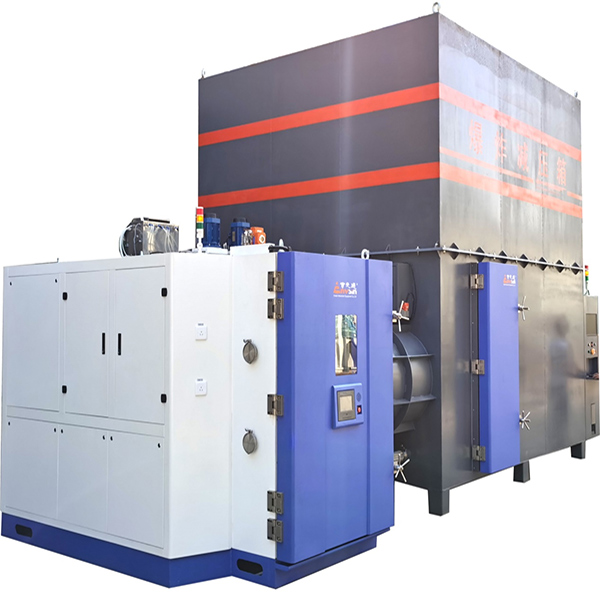
The high and low temperature explosive decompression test chamber is suitable for conducting simulated environmental tests of single climatic factors or multiple climatic factors on complete equipment, components, and materials, including high temperature, low temperature, damp heat, normal pressure test, rapid decompression, explosive decompression, combined temperature, humidity and pressure tests, etc. It is used to evaluate the reliability of products or material components in use, storage, and transportation under corresponding temperature, humidity, and low-pressure environments, and can also energize the test specimens to measure electrical performance parameters.
The high and low temperature explosive decompression test chamber can be used for testing both heat-dissipating and non-heat-dissipating test specimens. For testing heat-dissipating test specimens, their heat dissipation power shall not exceed the cooling capacity of the refrigeration system of this test chamber. Since the control of temperature and humidity is a dynamic balance process, the cooling capacity of the refrigeration system also changes accordingly at different temperature and humidity points.
Cenários de aplicação
1.Aerospace & Aviation
This is the core application area. The chamber simulates the extreme environments at altitudes of tens of thousands of meters, such as rapid decompression and high/low temperature variations. It is used to verify the safety and performance integrity of airborne electronic equipment, aerospace instruments, and other critical components under such conditions. It also supports research in aviation physiology, pilot protective gear, and life support systems.
2. Defense & Military
The chamber simulates extreme battlefield environments involving high/low temperatures and rapid pressure changes. It tests military vehicles, weapon systems, ammunition, ballistic protection gear, military electronics, and individual soldier equipment to ensure reliability, environmental adaptability, and safety under complex combat conditions.
3.Oil & Gas
In the petrochemical industry, where flammable gases and liquids are prevalent, the chamber tests electronic devices, sensors, chemical pipeline seals, and downhole tools used in mines and oilfields. It validates seal integrity and explosion-proof capabilities under extreme temperatures and rapid pressure changes, preventing catastrophic failures during oil and gas extraction and transport.
4. Chemicals & New Materials
The chamber evaluates the structural stability, sealing performance, aging resistance, and corrosion resistance of various chemical products, plastics, rubbers, and other polymer materials under high/low temperature and rapid decompression. A typical application is testing rubber O-rings for resistance to rapid gas decompression (RGD).
5.New Energy (Batteries)
This chamber tests lithium batteries, hydrogen fuel cells, and other energy storage devices for high/low temperature cycling, thermal runaway, and safety performance. It simulates low-pressure, high-altitude conditions to assess battery discharge performance and stability, helping prevent fires or explosions.
6.Automotive Electronics
Key automotive components such as engine control units (ECUs), fuel sensors, various electronic modules, and the “three-electric” systems (battery, motor, electronics) of new energy vehicles are tested for performance and safety under extreme temperatures, ensuring reliable operation in diverse climates.
7. Electronics & Information & Communication Technology (ICT)
The chamber validates the reliability of electrical and electronic products, components, instruments, communication equipment, and drones under high-altitude or high-temperature low-pressure conditions. It helps manufacturers identify design flaws and improve environmental adaptability and product quality.
8.Shipbuilding & Marine Engineering
Marine electronics, control systems, communication/navigation equipment, and sealing components are tested under simulated marine conditions, including high/low temperatures, rapid pressure changes, and salt spray corrosion, ensuring reliability in harsh sea environments.
9. Rail Transportation
The chamber tests onboard electronic equipment, sensors, and control systems on high-speed trains and subway vehicles for reliability and safety under high/low temperature cycles and pressure changes inside tunnels.
🔬 Scientific Research & Third-Party Testing
Research institutes, university labs (e.g., engineering physics, materials science, aerospace medicine), and third-party testing/certification bodies (e.g., SGS, TÜV) use this chamber for cutting-edge research, standard compliance testing, and product certification.
No related products found.