





Sabia que quase 65% das falhas de componentes electrónicos e automóveis se devem a stress induzido pela temperatura? Imagine um drone a voar sob o sol do deserto e, em seguida, a subir rapidamente para uma altitude elevada, onde as temperaturas caem a pique. Sem validação, as microfissuras, as fracturas das juntas de soldadura e a delaminação do material tornam-se assassinos silenciosos. É exatamente por isso que a ensaio de ciclos de temperatura tornou-se o padrão de ouro para a durabilidade do produto - e Envsin fornece as câmaras de ensaio ambiental de elevado desempenho que tornam estes ensaios precisos, repetíveis e conformes.
Definição do teste de ciclos de temperatura
A ensaio de ciclos de temperatura (também designado por ensaio de ciclos térmicos) expõe um produto ou material a temperaturas extremas alternadas - normalmente de um extremo frio muito baixo a um extremo quente muito alto e vice-versa - dentro de um período controlado câmara de ensaio de temperatura. Ao contrário dos ensaios de choque térmico (que utilizam transições rápidas), os ciclos de temperatura privilegiam taxas de rampa controladas e durações de imersão para simular tensões ambientais realistas. O objetivo? Avaliar até que ponto os componentes, conjuntos ou sistemas completos suportam a expansão e contração térmicas ao longo de ciclos repetidos.
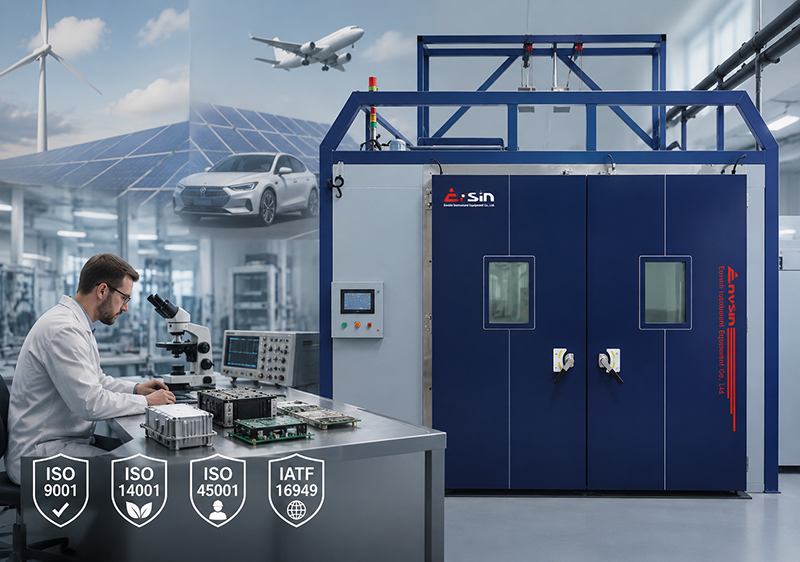
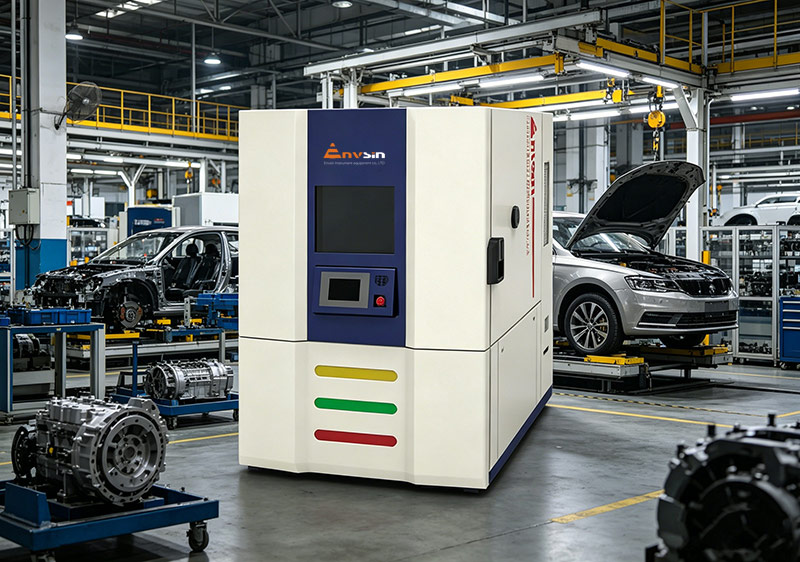
Na prática, um câmara de ensaio ambiental de um fabricante de confiança como a Envsin automatiza todo o processo: aquecimento, arrefecimento, tempos de permanência e registo de dados precisos. Este teste revela defeitos latentes, tais como falhas de vedação, deformação de PCB, afrouxamento de conectores ou fissuras no revestimento antes de os produtos chegarem aos clientes.
Porque é que os testes de ciclos de temperatura são mais importantes do que nunca
Desde veículos eléctricos e infra-estruturas 5G a dispositivos médicos e aviónicos aeroespaciais, os produtos modernos enfrentam diariamente ambientes térmicos flutuantes. Um simples ensaio de ciclos de temperatura revela mecanismos de falha que os testes funcionais padrão não detectam. Por exemplo, a expansão e contração repetidas fazem com que materiais diferentes (como plástico ligado a metal) se separem ao longo do tempo. Ao efetuar um ensaio de ciclos térmicos logo na fase de conceção, os engenheiros podem reforçar interfaces fracas, selecionar melhores materiais e aumentar o tempo médio entre falhas (MTBF).
Além disso, a conformidade com as normas internacionais (IEC 60068-2-14, JESD22-A104, MIL-STD-810) exige frequentemente um desempenho documentado do ciclo de temperatura. Sem uma câmara de ensaio de temperatura que assegura um fluxo de ar uniforme e taxas de transição rápidas, a certificação torna-se quase impossível. As câmaras da Envsin são projectadas para satisfazer estes requisitos exigentes, oferecendo uma execução de testes perfeita desde o protótipo até à validação da produção.
Parâmetros críticos e normas de ensaio
Para executar um ensaio de ciclos de temperatura, Para definir as variáveis de acordo com o ambiente de utilização final do produto, é necessário definir diversas variáveis:
- Gama de temperaturas: Intervalos comuns: -40°C a +85°C (eletrónica comercial), -55°C a +125°C (militar/aeroespacial).
- Taxa de rampa: Tipicamente 5°C/min a 15°C/min; alguns ciclos de alta tensão exigem transições mais rápidas.
- Tempo de permanência (imersão): Tempo passado em cada extremo de temperatura para permitir a estabilização da temperatura central.
- Número de ciclos: De 10 a mais de 1000 ciclos, com base na simulação do tempo de vida útil previsto.
Normas respeitáveis como a IEC 60068-2-14 fornecem procedimentos pormenorizados, mas é o próprio equipamento que determina a exatidão. O sistema câmaras de ensaio ambientais estão equipados com controlo PID avançado, monitorização em tempo real e caraterísticas de segurança que garantem que cada passo de temperatura corresponde perfeitamente ao perfil de teste, evitando falsas falhas ou defeitos não detectados.
Como é efectuado um teste de ciclos de temperatura? (Passo a passo)
Execução de um projeto profissional ensaio de ciclos de temperatura envolve quatro fases principais dentro de um câmara de ensaio ambiental. Eis um fluxo de trabalho típico com câmaras Envsin:
- Fixação e configuração: O produto (DUT) é montado no interior do câmara de ensaio de temperatura com sensores ligados a áreas críticas (termopares). As câmaras Envsin possuem múltiplas portas de passagem para facilitar a cablagem sem fugas de temperatura.
- Programação do perfil: Os engenheiros introduzem taxas de rampa, pontos de ajuste de temperatura, durações de permanência e contagem de ciclos no controlador de ecrã tátil da câmara. O software intuitivo da Envsin suporta perfis complexos de vários passos.
- Ciclo automatizado: A câmara passa automaticamente do ambiente para o extremo frio → imersões → rampas para o extremo quente → imersões → repetições. Os dados são registados durante todo o processo para análise de falhas.
- Inspeção e relatórios: Depois de completar os ciclos, o DUT é submetido a uma inspeção eléctrica, mecânica ou visual. Rachaduras, mudanças de resistência ou quedas de desempenho indicam pontos fracos.
Graças à construção robusta do Envsin e à distribuição uniforme da temperatura, os seus resultados permanecem altamente repetíveis - essencial para testes comparativos e garantia de qualidade.
Principais indústrias que dependem de câmaras de ciclo de temperatura
Ensaios de ciclos de temperatura transcendem as indústrias. Qualquer produto exposto a variações de temperatura diárias ou sazonais pode beneficiar. Os principais sectores incluem:
- Automóvel e EV: Pacotes de baterias, ECUs, sensores, módulos de iluminação (testados de -40°C a 85°C).
- Eletrónica de consumo: Smartphones, computadores portáteis, dispositivos portáteis, dispositivos domésticos inteligentes.
- Aeroespacial e defesa: Aviónica, componentes de radar, sistemas de navegação.
- Dispositivos médicos: Monitores portáteis, equipamento de imagiologia, instrumentos esterilizáveis.
- Energias renováveis: Inversores solares, controladores de turbinas eólicas.
Em cada caso, um ensaio de ciclos de temperatura A câmara da Envsin garante o cumprimento dos objectivos de qualidade, reduzindo as devoluções no terreno e melhorando a reputação da marca.
Por mais de uma década, a Envsin projetou câmaras de ciclagem de temperatura de última geração, testadores de choque térmico e câmaras climáticas confiáveis por fabricantes globais. Nossas câmaras oferecem taxas de rampa rápidas (±15°C/min), uniformidade superior (±0,5°C) e refrigeração com eficiência energética. Quer necessite de uma câmara de bancada câmara de ensaio de temperatura para I&D ou uma solução para grandes montagens, a Envsin oferece fiabilidade à medida. Potencie o seu teste de ciclos de temperatura com a precisão Envsin.
Escolher a câmara de teste de ciclos de temperatura correta
Seleção de um câmara de ensaio ambiental para ciclos de temperatura não é um modelo único para todos. Eis o que deve ser avaliado antes de investir:
- Gama de temperaturas e taxa de variação: Combine o ambiente do seu produto no pior dos casos. As câmaras Envsin oferecem intervalos de -70°C a +180°C com taxas de rampa programáveis.
- Volume da câmara e capacidade de carga: Assegure-se de que o espaço interior e as prateleiras são suficientes para o tamanho do seu DUT.
- Controlo e aquisição de dados: Procure conetividade Ethernet, monitorização remota e gráficos em tempo real. As câmaras Envsin são fornecidas com controladores inteligentes e registos exportáveis.
- Eficiência energética e segurança: Os refrigerantes de baixo GWP, a proteção contra sobreaquecimento e os ciclos de descongelação automática reduzem os custos operacionais.
Ao estabelecer uma parceria com a Envsin, não só obtém uma ensaio de ciclos de temperatura mas também suporte de aplicações, serviços de calibração e soluções personalizadas que se adaptam perfeitamente ao seu roteiro de testes.
Conclusão: Desbloquear a fiabilidade com testes de ciclos de temperatura
Num mundo em que as falhas de produtos conduzem a recolhas, riscos de segurança e perda de confiança, a ensaio de ciclos de temperatura actua como um escudo essencial. Transforma a adivinhação em fiabilidade baseada em dados, detectando a fadiga térmica oculta antes de chegar aos seus clientes. Desde a compreensão dos mecanismos fundamentais até à aplicação de normas internacionais, o investimento em câmaras de ensaio térmico não é negociável. A Envsin está pronta para fornecer câmaras ambientais robustas, precisas e duráveis que elevam a sua capacidade de teste. Por isso, quer esteja a validar módulos de baterias EV ou aviónica aeroespacial, inicie a sua viagem de ciclos de temperatura com a Envsin - e construa produtos que prosperam em condições extremas.
Precisa de um orçamento à medida ou de uma consulta técnica? A equipa de engenharia da Envsin ajuda-o a definir os parâmetros de teste e as especificações da câmara que se adequam ao seu orçamento e calendário. Faça do ciclo de temperatura a sua vantagem competitiva.