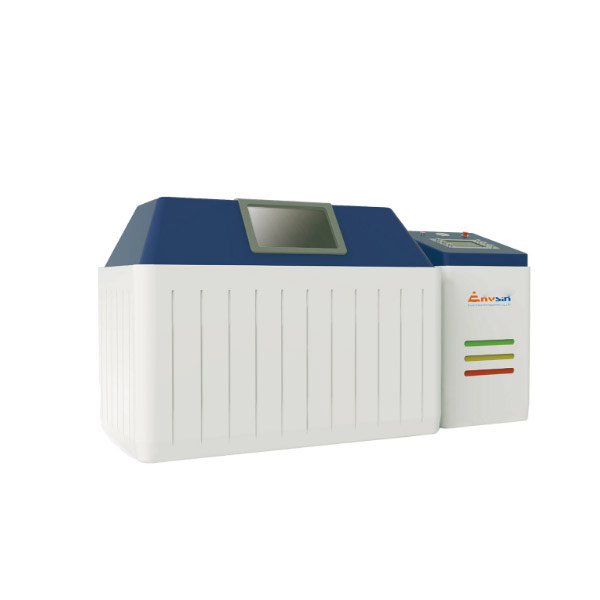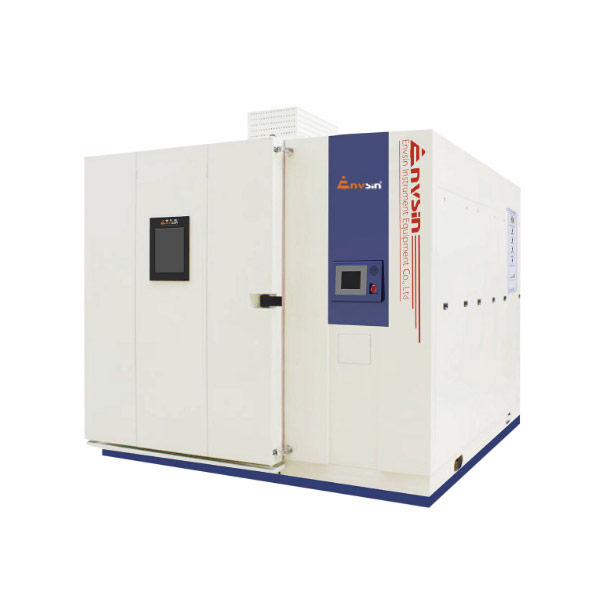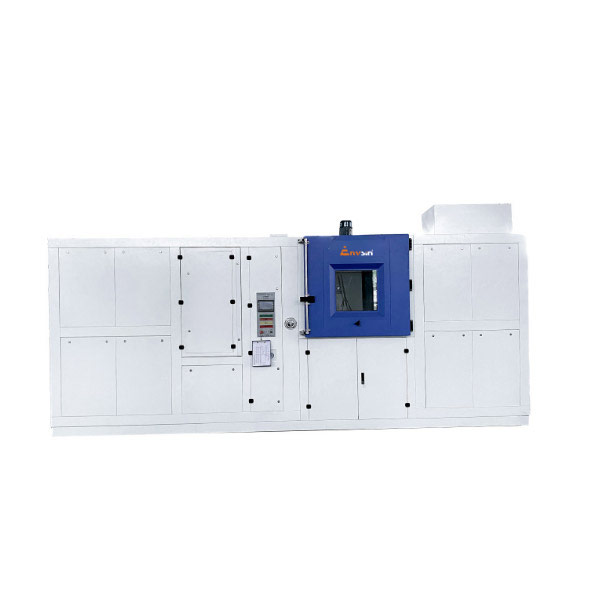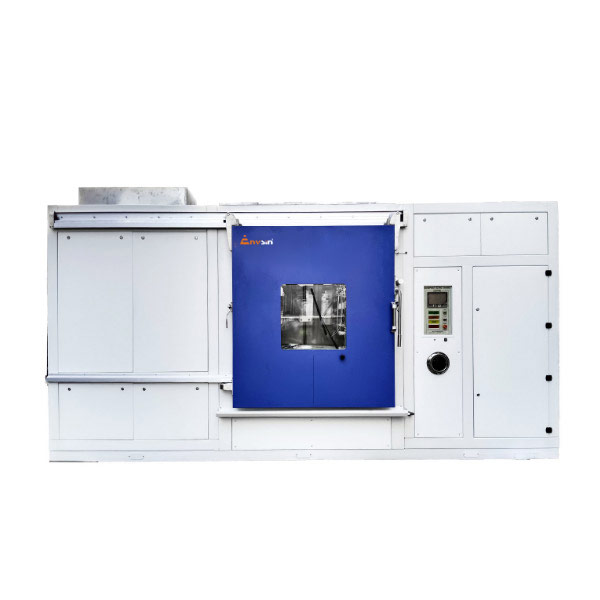
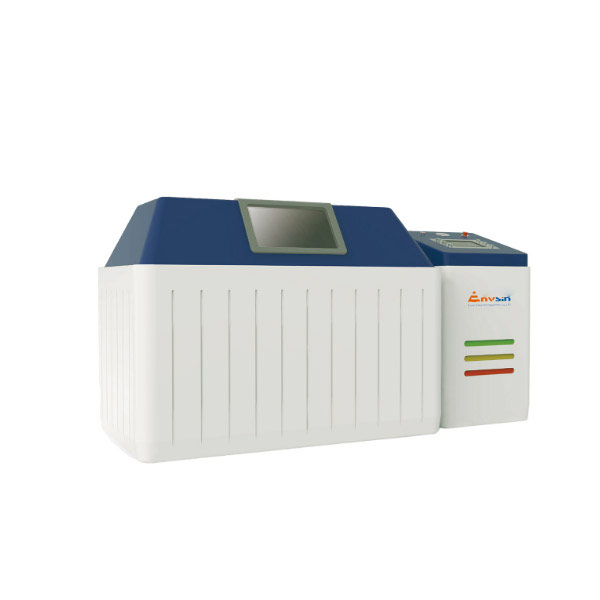
Salt spray/temperature and humidity composite test chambers are mainly used for salt spray corrosion and temperature and humidity environment durability testing of materials, coatings, electroplated layers, and various products.
Parametry produktu
| Objętość testowa | 5 m³ |
| Wymiary komory (szer. × głęb. × wys.) | 1700mm × 1500mm × 2000mm |
| Wymiary całkowite (szer. × głęb. × wys.) | Approx. 2430mm × 2300mm × 3370mm (Z wyłączeniem wystających części; ostateczny projekt podlega walidacji inżynieryjnej) |
| Zasilanie | AC380V ±10%, 50Hz ±1, 3-fazowy 4-przewodowy + uziemienie (3/N/PE), rezystancja uziemienia <4Ω |
| Maks. Moc systemu | Approx. 21 kW (subject to final engineering design) |
| Maks. Prąd systemu | Approx. 38 A (subject to final engineering design) |
| Zakres temperatur | 0℃ ~ +100℃ Salt spray test chamber temperature: RT ~ 55℃ (adjustable) Pressure tank temperature: RT ~ 70℃ (adjustable) Temperature uniformity: ≤2℃ (no load, steady state) Temperature fluctuation: ±0.5℃ (no load, steady state) Temperature deviation: ±2℃ (no load, steady state) Temperature overshoot: ≤2.5℃ Heating rate: ≥1℃/min (0℃ ~ +85℃, overall average) Cooling rate: ≥1℃/min (+85℃ ~ 0℃, overall average) |
| Zakres kontroli temperatury | +20℃ ~ +85℃ |
| Zakres wilgotności | 20%RH ~ 98%RH |
| Critical Temperature & Humidity Control Points | 1. 20℃, 30%RH 2. 20℃, 95%RH 3. 40℃, 20%RH 4. 85℃, 20%RH 5. 85℃, 95%RH |
| Salt Spray Deposition Rate | 1 ~ 3 mL/80cm²·h (adjustable; average value from at least 16 hours of collection) Number of salt spray collectors: at least 4, installed inside the chamber. |
| Spray Mode | Freely selectable and settable: 1 min ~ 9999 h constant operation, programmable cycle operation; continuous spray / programmed intermittent spray. |
| Salt Spray Test Solution | Prepared according to relevant test standards. |
| Salt Spray Rinse Function | Equipped with salt spray rinse function, capable of performing compressed air & salt spray and compressed air dry salt spray. Equipped with acid mist cleaning and salt spray purge functions. |
| Fog Removal Method | Fog is expelled by air pressure; the chamber cover is of sliding design with a 120° apex angle, preventing droplets from falling directly onto the specimen, ensuring test accuracy. |
| Pollution & Electromagnetic Radiation | Complies with relevant standards. |
| Applicable Test Methods | • GB/T2423.17-2008 Test Ka: Salt spray • GB/T2423.18-2008 / IEC 60068-2-11:1981 Test Kb: Salt spray, cyclic (sodium chloride solution) • ASTM B117-2009 Salt spray test • JIS H8502 Salt spray test method • GB/T10125-2012 / ISO 9227-2006 Salt spray test method • GB/T10587-2006 Technical specification for salt spray test chambers • GB10593.2-1990 Measurement methods for environmental parameters of electrical and electronic products • GB/T1765-1979 Determination of resistance to humidity, salt spray, and weathering (artificial acceleration) for paint films • GB/T1771-2007 Determination of performance indicators in paints and varnishes • GB/T12967.3-2008 Test methods for anodic oxide coatings on aluminum and aluminum alloys – Part 3: Copper accelerated acetic acid salt spray test • GB/T31467.3-2015 Safety requirements and test methods for traction batteries and systems of electric vehicles • IEC 60068-2-11:1981 Salt spray test • IEC68-2-52 1996 Salt spray test • GB/T1510.1A-2009 Laboratory environmental test methods for military equipment – Salt spray test |
| Metrology & Test Standards | • GB/T5170.2-2008 Inspection methods for environmental test equipment for electrical and electronic products – Temperature test equipment • GB/T5170.5-2008 Inspection methods for environmental test equipment for electrical and electronic products – Humidity test equipment • GB/T5170.8-2008 Inspection methods for environmental test equipment for electrical and electronic products – Salt spray test equipment |
Cechy produktu
1. Features rapid defogging; this function can be used when the test is terminated or temporarily stopped to force the residual salt spray gas in the chamber to be expelled outdoors.
2. Precision glass nozzles (PYREX) ensure uniform mist diffusion, allowing it to fall naturally onto the test specimens, guaranteeing no salt crystallization blockage even after 4000 hours of continuous operation.
3. The brine tank features a concealed water level observation window; the lid is made of transparent acrylic glass, providing excellent insulation and direct visibility of the spray process.
4. The saturated air tank is made of SUS304 stainless steel with high-temperature resistance, providing excellent insulation and the required humidity for the test chamber.
5. Employs an automatic water filling system that automatically replenishes water when the level is low. Yes, uninterrupted testing.
6. The test chamber uses direct steam heating, resulting in rapid and uniform heating, reducing standby time.
7. The spray tower is equipped with a conical diffuser, which guides the mist, adjusts the mist volume, and ensures uniform mist distribution.
8. The temperature controller uses a digital display and PID control, with an error of ±0.3℃.
9. A full-detection system is employed, with indicator lights to display fault occurrences.
Applications & Fields
1. Automotive Industry:
Automotive Component Testing: Evaluates the corrosion resistance and durability of automotive surface coatings, metal parts, and electronic components in salt spray, high-temperature, and high-humidity environments, ensuring the service life of automobiles in marine climates or salt lake regions.
Automotive Exterior Protection: Tests the corrosion resistance and color stability of automotive exterior materials (such as paint, chrome plating, etc.) in salt spray environments, ensuring the long-term aesthetic appeal of automobiles.
2. Aerospace:
Aircraft Component Testing: Evaluates the corrosion resistance and mechanical properties of aircraft structures, engine components, coatings, etc., in marine environments or salt lake regions, ensuring the safety and reliability of aircraft.
Spacecraft Component Testing: Tests the durability and reliability of spacecraft components such as satellites and rockets under salt spray, high temperature, and high humidity conditions to ensure their stability during launch and operation.
3. Marine Engineering:
Marine Equipment Testing: Evaluates the corrosion resistance and durability of marine platforms, structures, and equipment in marine environments to ensure their long-term stable operation.
Marine Materials Testing: Tests the corrosion resistance of marine materials (such as seawater protective coatings and marine metals) under salt spray and high humidity conditions to ensure their protective function in marine environments.
4. Electronics and Electrical Appliances Industry:
Electronic Component Testing: Evaluates the corrosion resistance and functional stability of electronic components (such as circuit boards and connectors) under salt spray and high humidity environments to ensure the reliability and durability of electronic products.
Outdoor Electronic Equipment Testing: Tests the protective performance of outdoor electronic equipment (such as surveillance cameras and outdoor billboards) under harsh weather conditions to ensure their normal operation in outdoor environments.
5. Metal Materials Industry:
Metal Corrosion Testing: Evaluating the corrosion resistance and corrosion rate of metallic materials in salt spray and high humidity environments, providing a reference for the selection and use of metallic materials.
6. Coatings and Surface Treatment Industry:
Anti-corrosion Coating Testing: Evaluating the protective effect and durability of anti-corrosion coatings under salt spray and high humidity conditions, providing guidance for coating development and application.