






You run a 500-hour reliability test, everything looks compliant — yet six months later, field failures spike. The hidden culprit? Poor environmental test accuracy. A temperature deviation of just 1°C or unstable humidity can turn a “pass” into a product disaster, triggering recalls, compliance headaches, and brand erosion. The good news is that with targeted improvements, you can dramatically sharpen your test data and avoid costly rework. Here’s how to master environmental test accuracy using proven methods and the right equipment.

1. Start with a precision-built test chamber
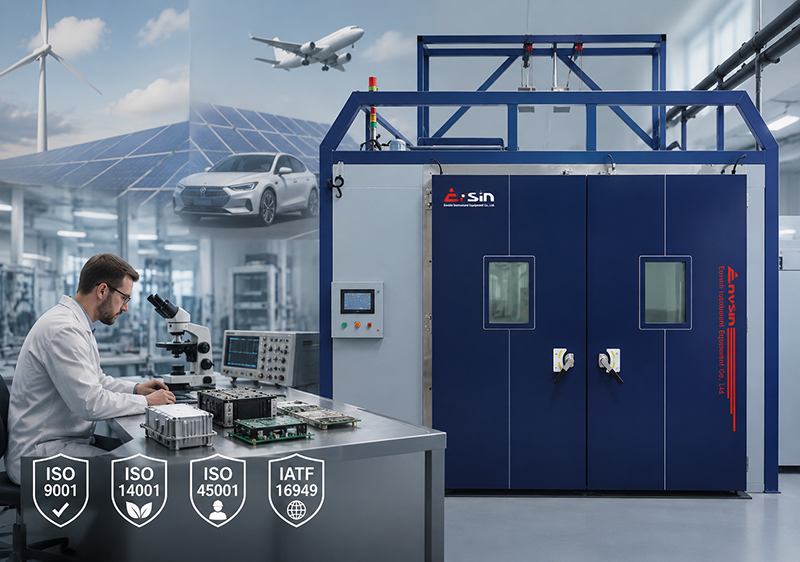
Your entire testing regime relies on the chamber’s intrinsic performance. Not all chambers deliver uniform conditions. Look for systems that guarantee temperature uniformity within ±0.5°C and stable humidity control across the workspace. High-performance Umweltprüfkammern from experienced manufacturers like Envsin integrate balanced airflow architecture and premium sensors, eliminating local hot or cold spots. A reliable Prüfkammer removes the biggest variable from your measurement chain, directly lifting environmental test accuracy.
2. Calibrate sensors and validate regularly
Even top-tier sensors drift over time due to thermal cycles and aging. Without routine calibration, your readings become guesswork. Perform NIST-traceable calibration every 6 to 12 months, depending on usage intensity and criticality of your tests. Document offsets and corrections meticulously. Smart teams also run intermediate checks with reference sensors between full calibrations. Consistent calibration is the cheapest insurance policy for preserving environmental test accuracy and regulatory compliance.
3. Optimize chamber loading and sample placement
Overcrowding is a silent accuracy killer. When shelves are packed or samples block air vents, recirculation suffers and temperature gradients appear. Always follow the chamber manufacturer’s loading guidelines — leave at least 15% free space around each test item. Position products away from walls, door seals, and return air ducts. This simple loading discipline often halves variability, turning an average Prüfkammer into a highly repeatable instrument. Better airflow equals better environmental test accuracy.
4. Leverage intelligent control and real-time monitoring
Modern chambers come with adaptive PID controllers and continuous data logging. Don’t treat them as set-and-forget boxes. Configure deviation alarms for temperature and humidity to catch excursions before they ruin a run. Real-time remote monitoring allows you to spot sensor drifts or equipment anomalies instantly. Some advanced systems generate trend analytics, helping you predict maintenance needs. The tighter your control loop, the more reliable every test outcome becomes, directly boosting your environmental test accuracy over the long term.
5. Implement a proactive maintenance routine
Dirty condenser coils, worn door gaskets, and low refrigerant levels gradually degrade performance — often without obvious signs. A well-maintained Umweltprüfkammer behaves like new. Create a monthly checklist: clean exterior coils, inspect seals for leaks, check airflow fans, and review humidity wick condition. Schedule an annual professional inspection for refrigeration and electrical systems. Small upkeep efforts prevent large accuracy drifts and extend chamber lifespan significantly.
Combine best practices with a trusted partner
Improving environmental test accuracy doesn’t require a lab overhaul; it requires consistency, proper equipment, and disciplined habits. By implementing these five strategies — choosing the right chamber, calibrating rigorously, optimizing loading, using smart controls, and proactive maintenance — you’ll see immediate improvements in repeatability and confidence. For high-stakes industries like aerospace, automotive, and electronics, partnering with an experienced supplier ensures you get robust hardware and application support. Envsin (www.envsin-testchamber.com) designs and manufactures Umweltprüfkammern built for precision and durability. When accuracy matters most, start with a foundation you can trust.