





Can your new electric vehicle sensor survive -40°C frost while withstanding 95% humidity for 500 hours? What about a medical device enduring sudden thermal shocks without failure? For engineers and quality leaders, these questions are mission-critical. An environmental test chamber transforms uncertainty into proof — simulating years of brutal climate conditions within days. Whether you develop aerospace components, consumer electronics, or pharmaceutical packaging, understanding the power of environmental chambers isn’t optional; it’s the backbone of modern reliability engineering. In this guide, we explore what an environmental test chamber is, how it works, and the undeniable benefits that drive product excellence.
What Is an Environmental Test Chamber? Definition & Core Function
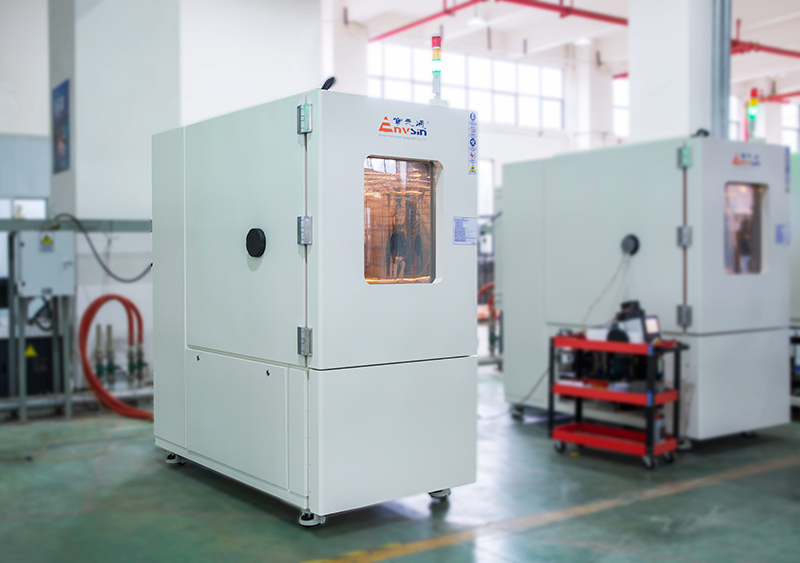
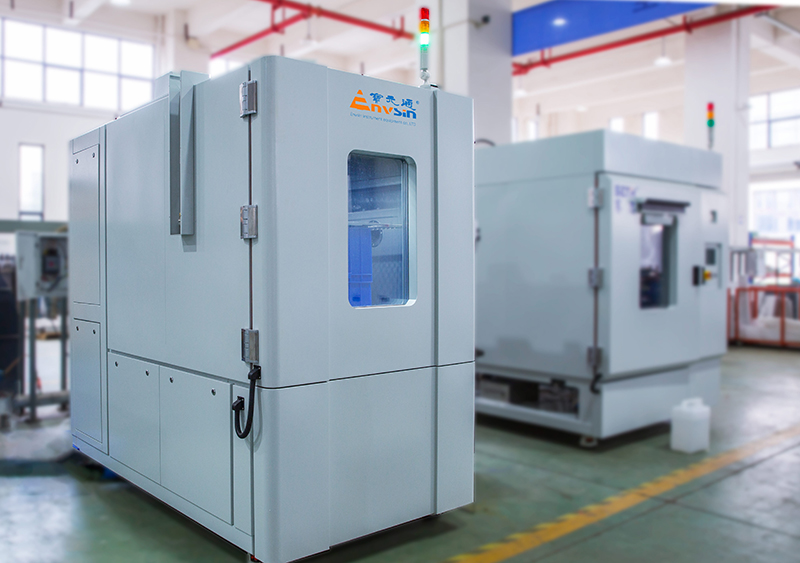
An environmental test chamber (often called a climate chamber or temperature humidity chamber) is a precisely controlled enclosure designed to replicate natural and extreme environmental conditions. From scorching heat (up to +180°C) to frigid cold (as low as -70°C), and from bone-dry deserts to saturated humidity (98% RH), these chambers accelerate real-world aging, stress, and weather exposure on products, materials, and components. The primary goal? To validate performance, uncover weak points, and ensure compliance with international standards such as IEC, MIL-STD, and ISO.
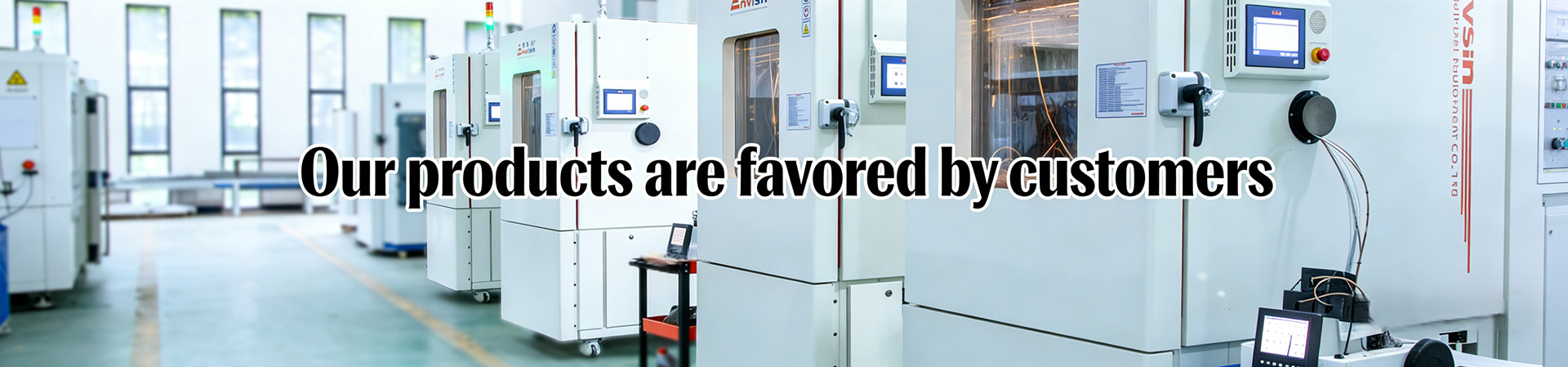
Modern environmental test chambers integrate advanced sensors, programmable logic controllers, and data logging systems. They allow engineers to create repeatable test profiles: temperature cycling, damp heat, thermal shock, altitude simulation, and even combined stress tests with vibration. Companies like Envsin specialize in delivering tailor-made chambers that match specific industry needs — ensuring every test yields actionable insights.
⚙️ Key InsightAn environmental test chamber acts as a time machine for product durability: 1 week inside can replicate 5 years of outdoor exposure, saving millions in recalls and reputation damage.
How Does an Environmental Chamber Work? Core Mechanisms
Despite varying sizes (from benchtop units to walk-in rooms), every environmental test chamber relies on three core systems: heating, cooling, and humidification. Heating elements (often nichrome or ceramic) provide rapid temperature rise, while a refrigeration system (cascade or single-stage) drives temperature down. Humidity is controlled via steam injection or ultrasonic atomizers combined with precise dry-bulb/wet-bulb sensors. Modern chambers from manufacturers like Envsin incorporate PID controllers with touchscreen interfaces, enabling complex ramp-soak-cycle profiles and real-time monitoring. Air circulation fans ensure uniform distribution, eliminating hotspots — critical for reproducibility.
Typical Parameters You Can Simulate
- Temperature range: -70°C to +180°C (customizable for extreme applications)
- Humidity control: 10% to 98% RH (non-condensing or condensing options)
- Thermal shock: rapid transitions between hot and cold zones within seconds
- Altitude & pressure: up to 50,000 ft simulation for aerospace validation
- UV/solar radiation: combined weathering tests for plastics and coatings
Why Use an Environmental Test Chamber? 5 Key Benefits That Drive ROI
Investing in a high-quality environmental test chamber directly impacts your bottom line, brand reputation, and time-to-market. Below are the most impactful advantages, proven across automotive, electronics, energy, and medical sectors.
1. Uncover Latent Defects Before Mass Production
Early detection of material brittleness, seal failures, or electronic drift under humidity prevents costly field failures. Using an environmental test chamber reduces warranty claims by up to 40% — a game changer for OEMs.
2. Ensure Regulatory & Industry Compliance
Standards like IEC 60068, ASTM D4332, and ISO 16750 require rigorous environmental testing. A validated environmental test chamber delivers documented proof that your product meets global safety and performance benchmarks, unlocking market access.
3. Accelerate Product Development Cycles
Instead of waiting months for natural seasons, chambers compress test timelines from months to days. Engineers iterate faster, design with confidence, and launch products ahead of competitors.
4. Enhance Brand Trust & Reduce Recall Risks
Automotive giants and medical device leaders rely on environmental chambers to simulate extreme scenarios. Passing such tests signals reliability, directly boosting customer loyalty and reducing expensive product recalls.
5. Optimize Material Selection & Longevity
Compare polymers, coatings, or sealants under controlled heat/humidity cycles. Data-driven material choices extend product lifespan and sustainability — especially crucial for green energy infrastructure.
Types of Environmental Test Chambers — Choosing the Right One
Selecting the correct chamber depends on your product size, test profile, and throughput. Here’s a quick breakdown:
- Benchtop / Tabletop Chambers: Ideal for small components, PCBs, and sensors. Space-saving with high precision.
- Temperature & Humidity Chambers: The most versatile, covering 90% of general reliability testing.
- Thermal Shock Chambers: Two-zone or three-zone designs for rapid temperature change tests (e.g., automotive electronics).
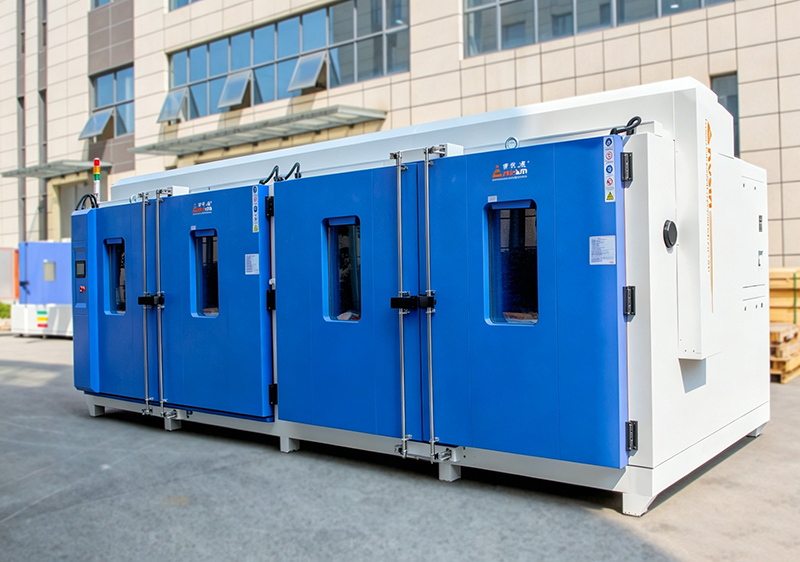
- Walk-in / Drive-in Chambers: For large equipment, pallets, or full vehicle subsystems; often custom-engineered.
- Specialty Chambers: Dustproof, rain, salt spray, altitude, and combined vibration + climate (multi-axis).
Envsin offers full customization: from chamber dimensions to additional ports for external sensors or gas introduction. Our engineering team works directly with your lab to guarantee that your environmental test chamber matches your exact test standards.
Key Industries That Rely on Environmental Testing
Environmental test chambers serve virtually every sector where reliability matters. Top adopters include:
- Automotive & EV: Battery pack testing, engine control units, infotainment systems under humidity and vibration.
- Aerospace & Defense: Avionics, radar components, and navigation systems exposed to extreme altitude and thermal cycles.
- Electronics & Semiconductors: PCB stress screening, LED aging, and solder joint reliability.
- Pharmaceutical & Medical: Stability testing for vaccines, drug stability chambers (ICH Q1A).
- Renewable Energy: Solar panel damp-heat tests, wind turbine controller durability.
How Envsin Elevates Your Environmental Testing Experience
With decades of engineering heritage, Envsin delivers environmental test chambers that combine precision, durability, and user-centric design. Our chambers feature intuitive HMIs, Ethernet connectivity for remote control, and energy-saving inverter technology — reducing power consumption by up to 30% compared to traditional units. More importantly, every chamber is factory-calibrated and comes with global service support. From standard temperature-humidity chambers to complex combined stress systems, Envsin ensures your testing program stays ahead of evolving standards. We don’t just sell equipment; we partner to maximize your reliability ROI.
Frequently Asked Questions (FAQs)
Q: What’s the difference between an environmental test chamber and a stability chamber?
A: While both control temperature/humidity, stability chambers (often pharmaceutical) focus on long-term storage conditions (e.g., 25°C/60%RH) with tight uniformity. Environmental test chambers handle wider ranges, dynamic ramps, and extreme stress cycles.
Q: How do I calculate the right chamber size for my product?
A: General rule: product should occupy no more than 1/3 of the chamber’s internal volume to allow proper airflow and uniformity. Envsin’s experts provide free load analysis for optimal sizing.
Q: Can an environmental test chamber simulate rain and solar radiation together?
A: Yes, advanced weathering chambers combine UV lamps, water spray, and temperature/humidity cycles — ideal for automotive exterior trims or outdoor enclosures.
Final Thoughts — Future-Proof Products with Reliable Testing
Whether you’re qualifying a new drone motor or validating a 5G base station, an environmental test chamber is the silent guardian of your quality assurance workflow. By simulating harsh realities in a controlled lab environment, you transform guesswork into engineering certainty. The benefits — fewer recalls, faster certification, and stronger brand equity — speak for themselves. For organizations ready to elevate their reliability testing, Envsin provides turnkey solutions, from consultation to installation and ISO-compliant training. Request a quote today and discover how the right environmental chamber can become your competitive advantage.