





Imagine shipping a batch of automotive sensors to Siberia, only to have them fail at -40°C, while your Dubai shipment melts inside a shipping container. You cannot move your lab to the tundra or the desert. But you can bring the tundra and the desert to your production line. At Envsin, we build the bridge between your lab and the planet’s most extreme climates, helping engineers catch failures before nature does.
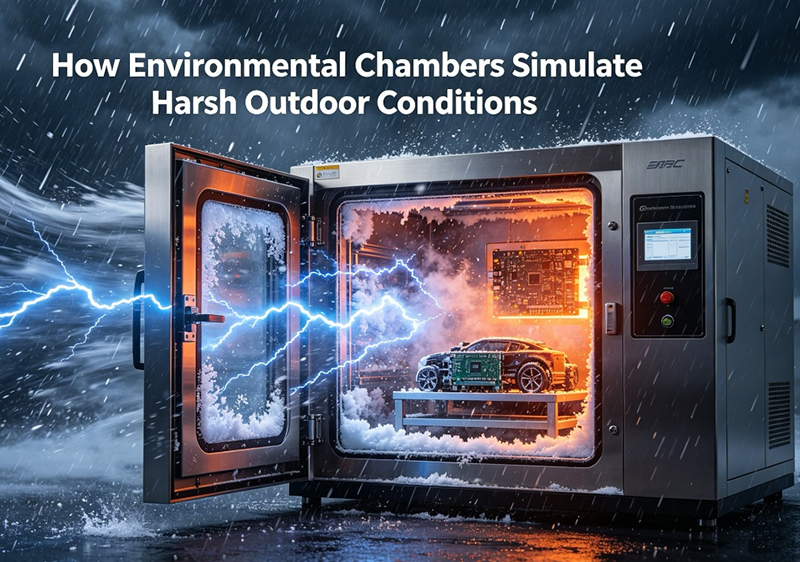
An environmental chamber is more than a box with a heater. It is a precise tool for controlled temperature and humidity simulation. Modern test chambers do not just make things hot or cold; they recreate dew point, thermal shock, and altitude pressure.
For example, a standard benchtop model can swing from -70°C to +180°C in minutes. This tests how materials expand and contract. Meanwhile, a humidity chamber adds condensing moisture to mimic a monsoon in Singapore or a dry heat in Phoenix. Without this data, a product’s Mean Time Between Failures (MTBF) is just a guess.
Nature rarely attacks with one variable. It uses combined stress. UV radiation weakens polymers while vibration loosens screws. Then humidity causes corrosion inside the housing. A single thermal cycle can crack a solder joint that passed a static test.
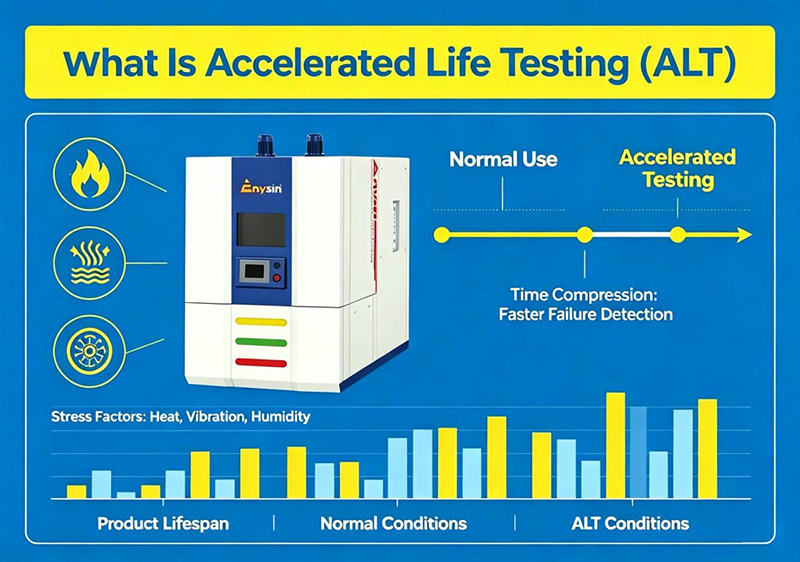
This is why engineers use an environmental simulation chamber to run “combined environment” tests. You set the temperature cycling profile while injecting dust or altitude pressure. Envsin chambers allow you to layer these stresses, replicating 10 years of outdoor weathering in just 6 months of lab time.
Manufacturers of EV batteries, medical devices, and defense electronics rely on these simulations to meet IEC and MIL-STD standards. For instance:
- Automóvel:Testing headlights for sudden ice melting and re-freezing.
- Aeroespacial:Simulating rapid decompression at 15,000 meters.
- Eletrónica de consumo:Checking touchscreen functionality in tropical humidity.
Not all test chambers handle gradient uniformity well. Poor chambers create hot spots that skew data. Envsin units feature a patented air duct design, keeping variance within ±0.5°C. Plus, our touchscreen controller logs real-time data for ISO audits. You don’t just get a pass or fail; you get traceable proof.
Do not wait for a field failure to tell you your design is weak. By simulating harsh outdoor conditions indoors, you compress time and control variables. Whether you need a walk-in room for truck parts or a small temperature chamber for PCBs, Envsin delivers reliability.