





Selecting the optimal temperature range for an industrial komora środowiskowa is not just a technical formality—it directly impacts product reliability, test accuracy, and long-term equipment ROI. Engineers worldwide often face a critical question: what temperature span truly meets the needs of modern component testing without unnecessary cost or performance trade-offs? The answer determines whether your accelerated stress tests reveal real-world weaknesses or mask potential failures.
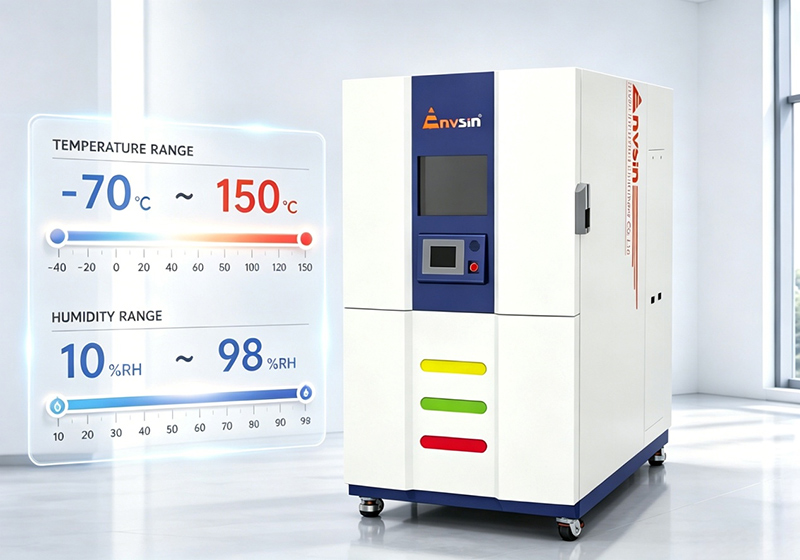
For most industrial applications, the sweet spot lies between -40°C and +150°C. This versatile window covers 85% of global reliability standards including IEC, MIL-STD, and ASTM protocols. Whether you are testing automotive sensors, medical devices, or aerospace electronics, this temperature range simulates extreme cold storage and high-heat operational stress. At envsin, we engineer our komory środowiskowe to deliver precise thermal uniformity across this entire span, ensuring no hot or cold spots compromise your data. But why these specific boundaries? Materials behave differently below -30°C, and many electronic components start to drift beyond +130°C. A properly rated industrial environmental chamber eliminates ambiguity.
However, certain industries demand extended capabilities. Battery testing for electric vehicles often requires temperature ranges from -50°C to +180°C, while defense projects may push from -70°C to +200°C. Before investing, evaluate your product lifecycle environment. Over-specifying adds unnecessary capital expense, while under-specifying leads to invalid test results. The best practice is to add a 15% safety margin above your maximum anticipated field temperature and 10% below minimum. That is why envsin’s modular środowiskowe komory testowe offer customizable ranges from -70°C to +200°C, giving you flexibility without overpaying.
Thermal ramp rate and stability matter equally to the raw min-max numbers. A chamber that reaches from -40°C to +125°C but takes 90 minutes to transition fails productivity benchmarks. Look for units with consistent heating/cooling rates (3°C to 5°C per minute typical). Also, verify that the chamber maintains temperature uniformity within ±0.5°C to ±1.0°C across the workspace. envsin integrates advanced PID control and air distribution systems that keep fluctuations minimal, so your industrial chamber delivers reproducible stress screening cycle after cycle.
Another hidden factor: humidity performance correlated with temperature range. High temperatures above +85°C combined with humidity require specialized sensors and sealing. If your protocol includes damp heat testing (85°C / 85% RH), confirm your chamber’s temperature range supports that without condensation damage. Similarly, low temperature reliability at -40°C demands robust defrost mechanisms. envsin chambers feature automatic hot gas bypass and heated viewing windows to prevent frost buildup, making zakres temperatur transitions smooth and maintenance low.
To summarize, the best temperature range for most industrial environmental chambers is -40°C to +150°C—a proven, cost-effective benchmark. But always align your choice with actual test standards and future growth. For extreme applications, consider extended spans with proper engineering margins. When you partner with envsin, you gain not only hardware but application guidance to select the optimal środowiskowa komora testowa for your unique parameters. Explore our models at www.envsin-testchamber.com and request a custom quote today.