





Every electronic product promises durability, but how can you be certain it will survive years of heat, cold, and humidity without failing? Reliability testing is the only way to catch hidden weaknesses before they reach your customers. From smartphones to automotive control units, even a single component failure can lead to costly recalls and damaged reputation. This article walks you through the most critical reliability tests that engineering teams use to validate electronic products, and how proper środowiskowe komory testowe play a central role in each one.
1. Temperature Cycling Test
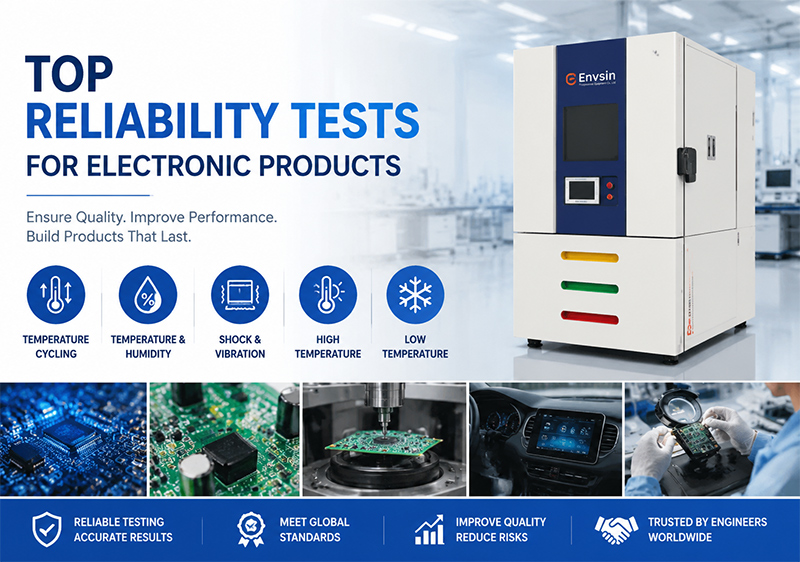
The temperature cycling test exposes electronic assemblies to repeated swings between extreme hot and cold temperatures. This simulates real-world conditions like day-night temperature changes or the thermal stress caused by power cycling. A typical profile might cycle from -40°C to +85°C over several hours, repeating dozens or hundreds of times. The goal is to identify solder joint cracks, PCB delamination, and component interconnect failures. A high-quality environmental test chamber provides precise ramp rates and uniform temperature distribution, ensuring repeatable results. Temperature cycling is often the first reliability test specified in standards like IEC 60068-2-14.
2. Thermal Shock Test
While temperature cycling applies gradual changes, thermal shock testing delivers instantaneous temperature transitions. The product is rapidly moved between two extreme zones, often within ten seconds. This aggressive test exposes material weaknesses like brittle coatings, seal failures, or die attach cracks that slower cycling might miss. Thermal shock chambers are essential for aerospace, military, and automotive electronics that face sudden environmental changes. For example, a thermal shock chamber can shift a component from -55°C to +125°C in under five seconds. Passing thermal shock gives high confidence in product ruggedness.
3. Damp Heat (Humidity) Test
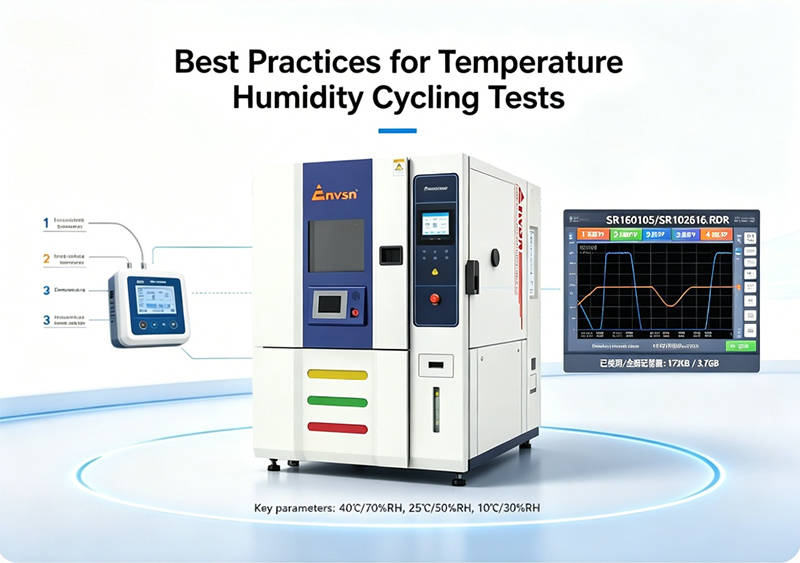
Humidity is a silent killer of electronics, causing corrosion, ionic migration, and insulation degradation. The damp heat test places products in a controlled environment with high relative humidity (typically 85% to 95% RH) and elevated temperature (such as +40°C or +85°C) for days or weeks. This accelerates the absorption of moisture into packaging materials and PCBs. A reliable humidity chamber maintains stable wet-bulb depression and prevents condensation that could skew results. Many standards, including IEC 60068-2-78, mandate damp heat testing for consumer and industrial electronics. Combining humidity with temperature cycling adds another layer of realism.
4. Highly Accelerated Life Test (HALT)
HALT uses stepped stress levels far beyond normal operating limits to find design margins. The product is subjected to rapid temperature changes, multi-axis vibration, and combined stresses until failures occur. By identifying weak points early, engineers can redesign before mass production. While HALT requires specialized chambers, the principles overlap with environmental test chambers capable of fast ramp rates and wide temperature ranges. HALT is not a pass/fail test but a discovery tool that yields robust products.
5. Salt Spray and Corrosion Test
For electronics used in marine, automotive underhood, or outdoor environments, salt spray testing evaluates corrosion resistance. The chamber atomizes a saline solution to create a corrosive fog, typically at +35°C for 24 to 96 hours. This test is crucial for connectors, enclosures, and coated PCBs. While often associated with metal components, corrosion can lead to electrical leakage and contact failure. Modern environmental test chambers can combine salt spray with temperature and humidity control for realistic mixed‑environment testing.
6. Combined Environmental Test
Real-world failures rarely come from a single stressor. Combined testing applies temperature, humidity, and sometimes vibration simultaneously. For instance, an automotive electronic module may experience -30°C with 80% RH while undergoing random vibration. Such tests require sophisticated environmental test chambers that integrate multiple functions. Combined testing reveals interaction effects that single-stress tests might mask, offering the highest confidence in product reliability.
Choosing the Right Test Chamber Partner
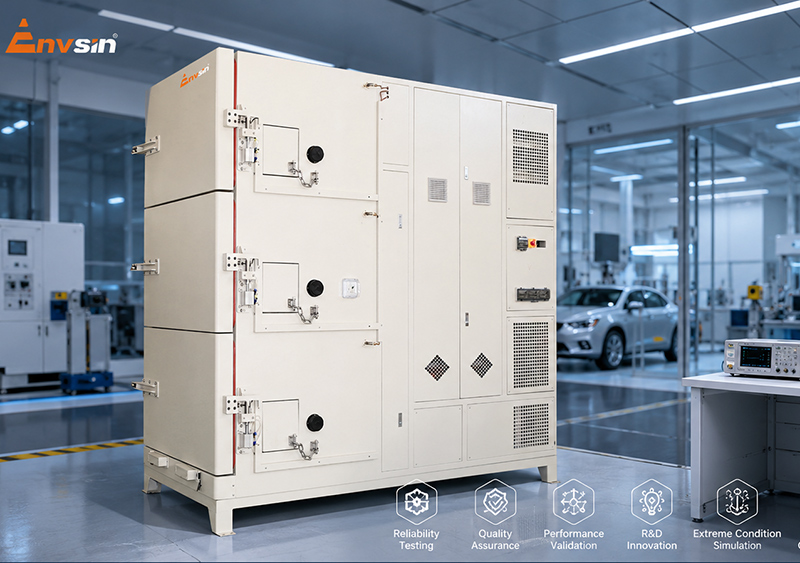
Executing these reliability tests demands precision equipment that delivers consistent conditions over thousands of hours. Envsin (www.envsin-testchamber.com) specializes in environmental test chambers designed for temperature cycling, thermal shock, humidity, and combined stress testing. Each chamber is built to meet international standards and backed by global support. Whether you qualify a new smartphone or validate automotive electronics, the right reliability tests — and the right chamber — transform uncertainty into proven durability.