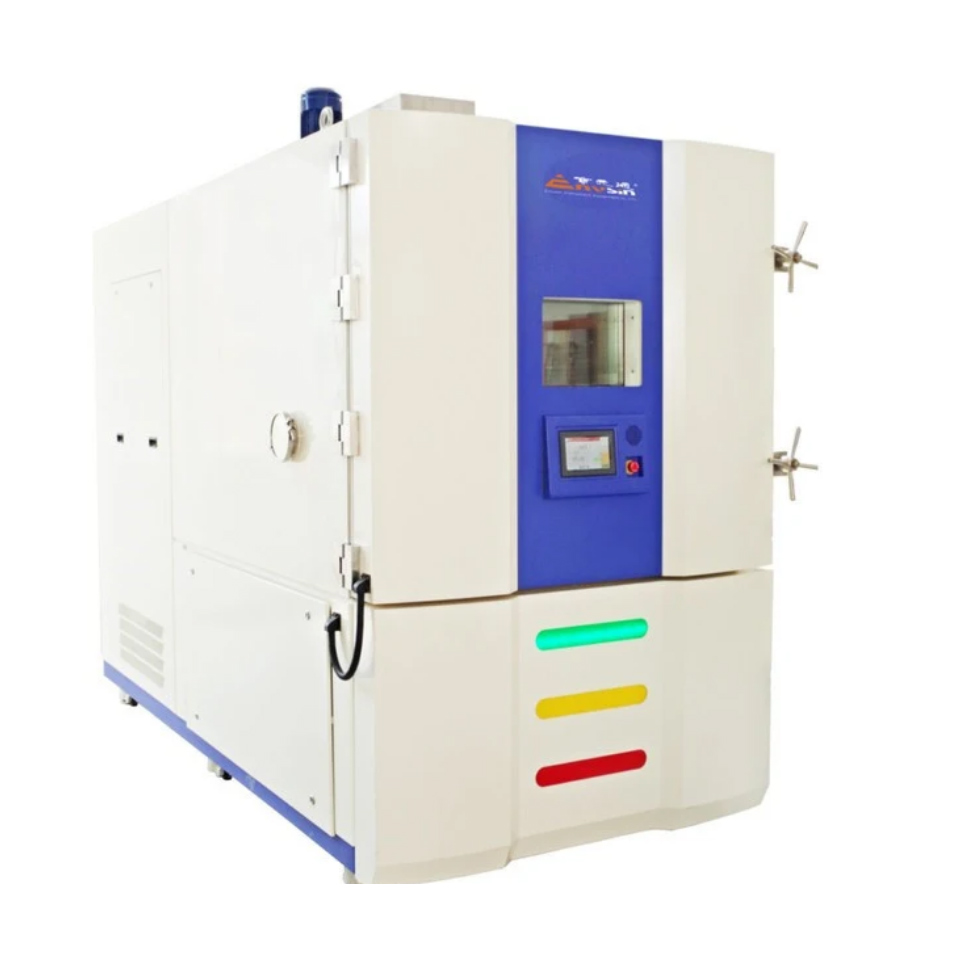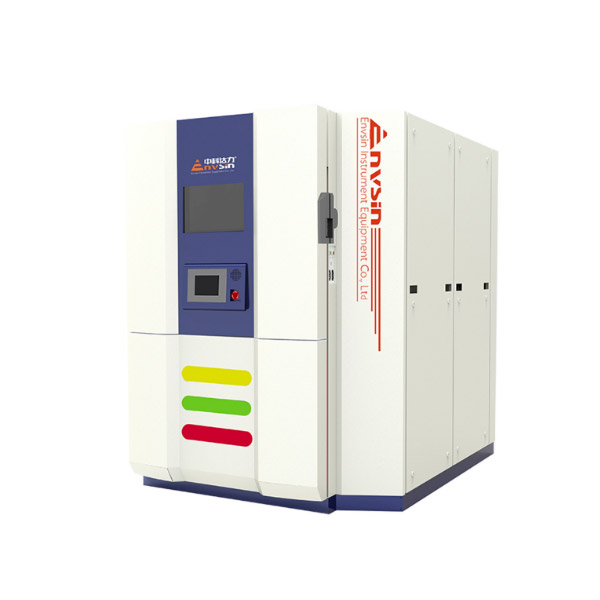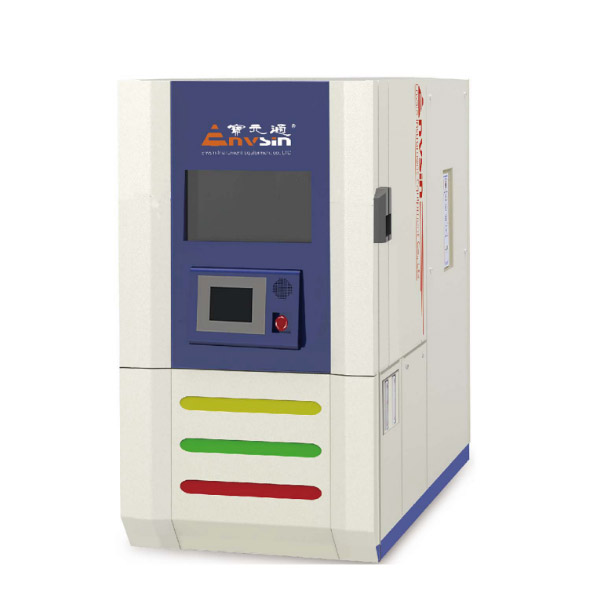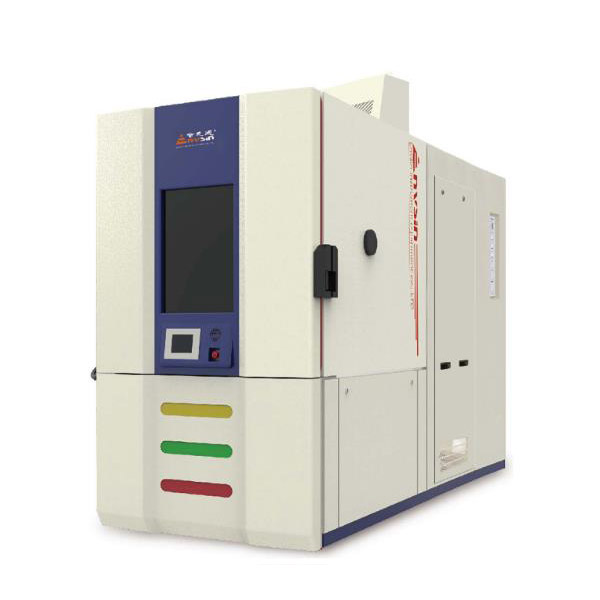
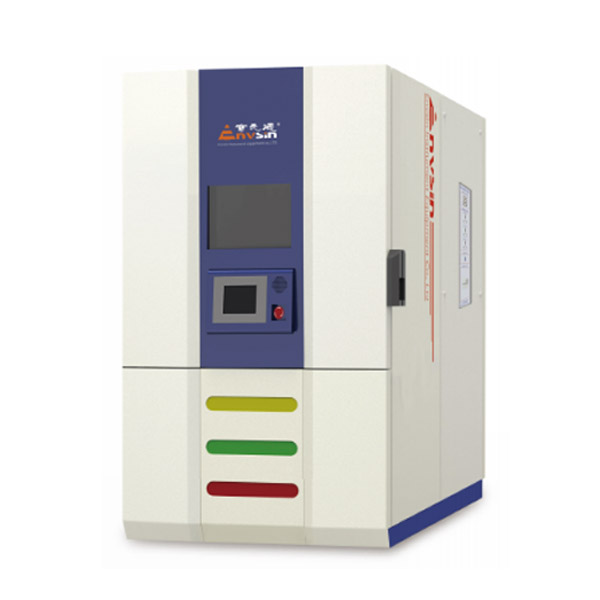
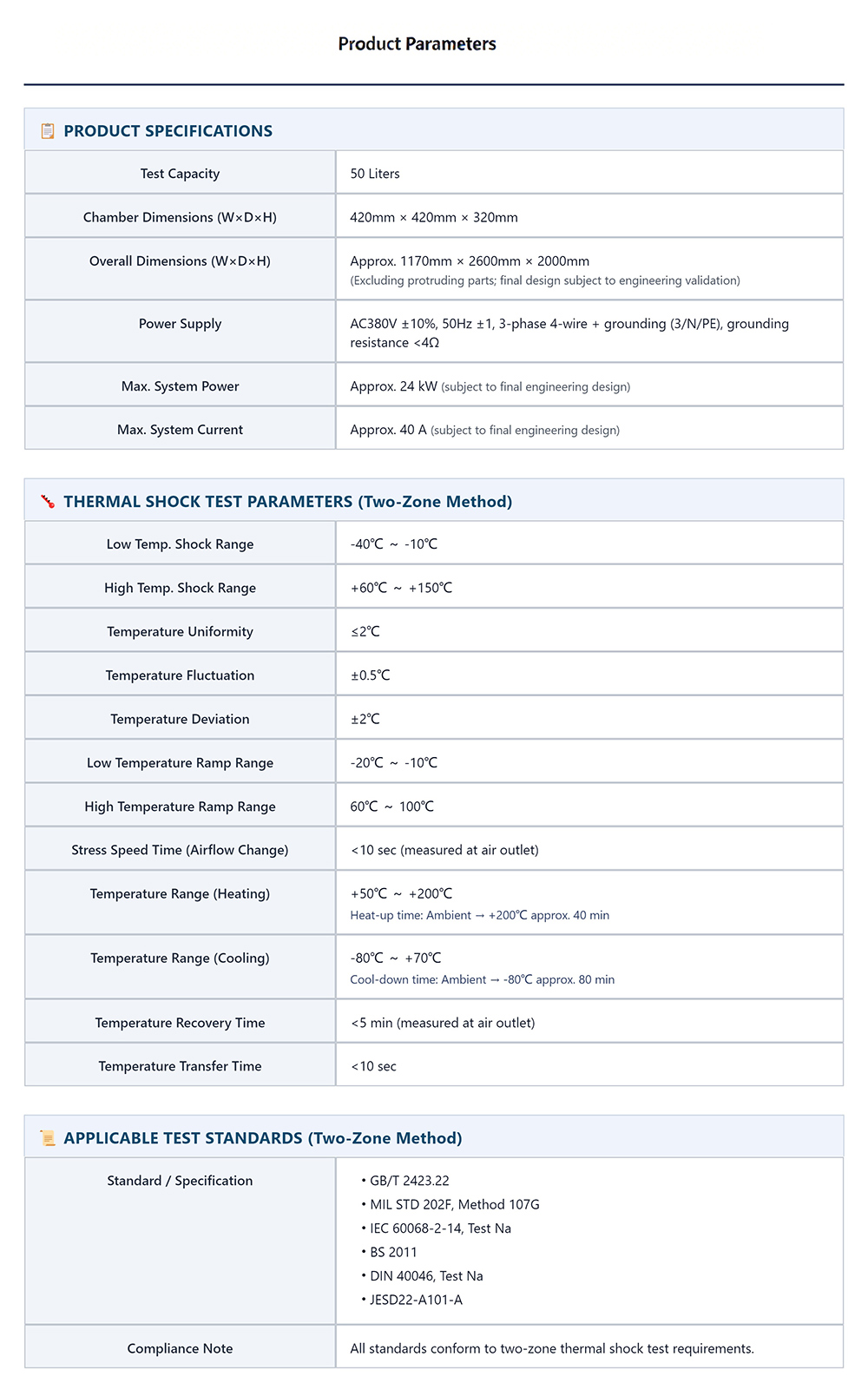
This thermal stress rapid change test chamber is designed to evaluate the ability of complete equipment, components, and parts to withstand rapid temperature fluctuations. This thermal shock test reveals the effects on test samples resulting from single or repeated exposure to temperature changes. The main parameters affecting the temperature change test include the high and low temperature values defining the temperature range, the dwell time of the sample at high and low temperatures, and the number of test cycles.
This test chamber is intended for testing non-heat-dissipating samples and low-heat-dissipating samples. For heat-dissipating samples, the heat dissipation power must not exceed the temperature control cooling capacity of the chamber’s refrigeration system; exceeding this limit will affect the chamber’s temperature transition speed and performance. It is recommended that heat dissipation of the test sample be less than 300 W. If you have special requirements, our company offers customized solutions.
Applications
Electronic Components and PCB Testing
Evaluate the thermal stress response of electronic components and printed circuit boards under rapid temperature change conditions. Assess stability and reliability during alternating high and low temperature exposure. Test performance degradation and lifespan of chips, capacitors, resistors, diodes, and other components under thermal stress.
Automotive Industry
Assess the thermal stress response of automotive parts and vehicle systems under rapid temperature change conditions, verifying stability and durability in extreme temperature environments. Test engine components, drivetrain systems, body structures, and more under thermal stress.
Aerospace
Evaluate the thermal stress response of aerospace devices and spacecraft materials under rapid temperature change conditions to ensure stability and reliability in space or high-altitude environments. Test aircraft components, spacecraft structures, external coatings, and more under thermal stress.
Materials Science
Assess the thermal stress response of new materials under rapid temperature change conditions to study their stability and reliability in practical engineering applications. Test composites, metals, polymers, and other materials under thermal stress.
Pharmaceuticals and Biotechnology
Evaluate the stability and activity of pharmaceuticals and biological products under rapid temperature change conditions, ensuring quality and effectiveness during storage and transport. Test vaccines, biopharmaceuticals, biological samples, and more under thermal stress.
Construction and Building Materials
Assess the thermal stress response of building materials under rapid temperature change conditions, verifying stability and durability in different climate conditions. Test concrete, glass, metal structures, and other construction materials under thermal stress.