





Every year, unforeseen environmental stress causes millions in product recalls and field failures. How can engineers predict whether a smartphone survives Amazonian humidity or an automotive sensor endures a desert’s freeze-thaw cycle? The answer lies inside a temperature humidity chamber — an indispensable tool for reliability testing. At Envsin, we engineer advanced cámaras de pruebas ambientales that recreate nature’s toughest conditions with laboratory precision. But what exactly happens inside these machines? Let’s demystify the science behind a temperature humidity chamber and explore how it delivers consistent, repeatable results.
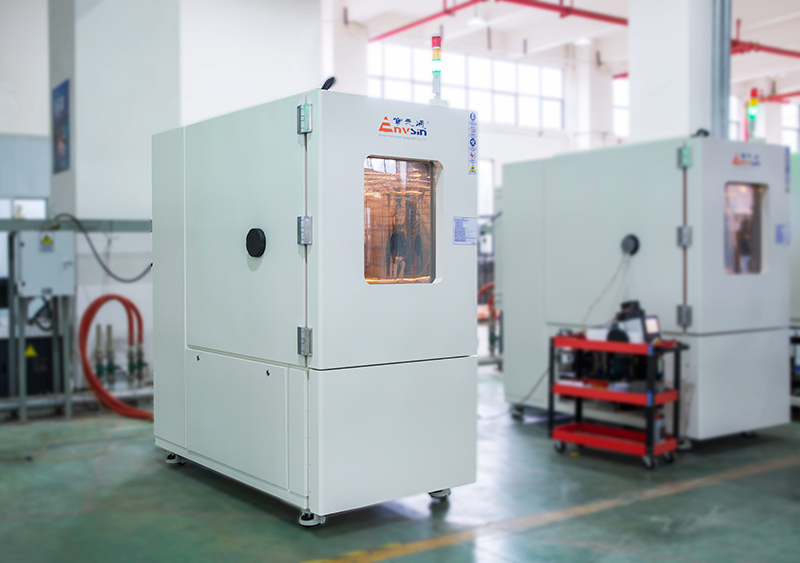
1. Core Architecture of a Climatic Chamber
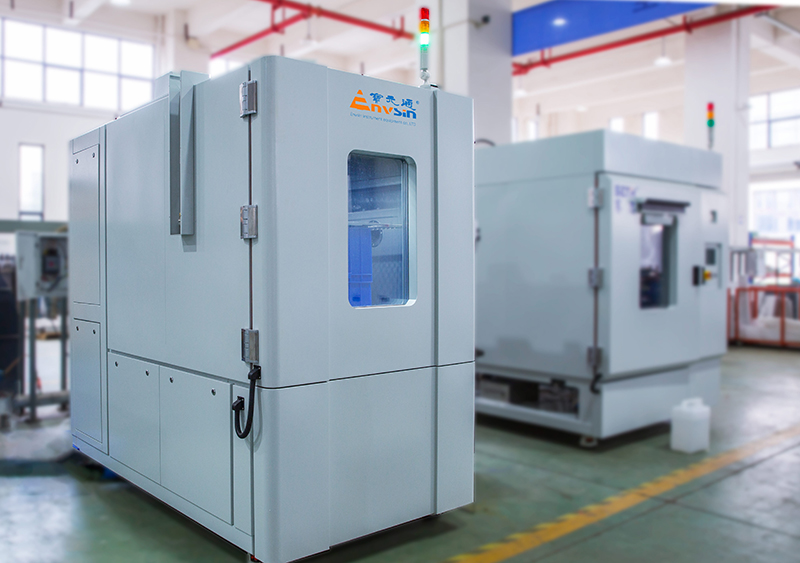
A modern temperature humidity chamber (also called climatic chamber or humidity chamber) is a tightly insulated enclosure equipped with independent systems for heating, cooling, humidifying, and dehumidifying. A high-velocity air circulator ensures uniform conditions across the workspace. All components are governed by a microprocessor-based controller — often with PID (proportional-integral-derivative) logic — that maintains setpoints within fractions of a degree or percent RH. Envsin’s chambers take this further with energy-optimized refrigeration and intuitive touch interfaces, making complex test profiles effortless.
2. Temperature Control Mechanism — Balancing Heat & Cold
To generate precise temperatures, the chamber uses two opposing systems: an electric heater (typically nichrome or tubular heating elements) and a mechanical refrigeration unit (single-stage or cascade for sub-zero ranges). The secret lies in balanced temperature control: the controller continuously compares the actual temperature against the setpoint and adjusts the heater duty cycle while the refrigeration runs at a constant or modulated capacity. This technique, known as BTC (balanced temperature control), avoids overshoot and maintains stability even during dynamic ramping. For extreme low temperatures, Envsin integrates cascade refrigeration with eco-friendly refrigerants, allowing reliable performance down to -70°C. Whether you perform electronics burn-in or pharmaceutical stability tests, your temperature humidity chamber must deliver uniform thermal distribution — and that’s achieved through a centrifugal fan and optimized duct design.
Why cooling & heating work together
Unlike a household fridge, an environmental test chamber often requires simultaneous heating and cooling to avoid condensation or to create rapid transitions. For example, dropping from +85°C to -40°C demands both compressor power and active heater management to prevent liquid accumulation. The temperature humidity chamber controller computes the perfect balance using advanced algorithms — a feature built into every Envsin system to extend compressor life and reduce energy waste.
3. Humidity Generation & Dehumidification — Mastering Moisture
Humidity control is what distinguishes a basic oven from a true humidity chamber. Inside a temperature humidity chamber, there are two primary methods for adding moisture: steam injection (boiler humidifier) or ultrasonic atomization. The boiler heats distilled water to produce clean vapor, which is then introduced into the circulating airstream. For dehumidification, most industrial chambers use a refrigeration coil (the evaporator) that condenses water vapor from the air, similar to how an air conditioner removes moisture. Some high-end models also incorporate solid-desiccant dryers for ultra-low dew points. Envsin’s proprietary dual-stage humidity control ensures rapid response and prevents overshoot, giving you steady RH values even during door openings. Sensors (thin-film capacitive or chilled mirror) provide real-time feedback, enabling the temperature humidity chamber to maintain relative humidity from 10% to 98% with deviations below ±2%.
4. Air Circulation & Uniformity — The Silent Enforcer
Without proper airflow, hotspots or dry zones would ruin test repeatability. A powerful, low-noise fan draws air across the evaporator and heater, then pushes it through a plenum and perforated diffusers into the workspace. This forced convection guarantees that every shelf position sees identical temperature and humidity levels. Leading manufacturers like Envsin perform extensive computational fluid dynamics (CFD) simulations to design air ducts that maintain uniformity within ±0.5°C and ±3% RH — critical for compliance with IEC, MIL-STD, and ISO test standards.
5. Intelligent Control System — The Brain Behind the Chamber
Modern cámaras de pruebas ambientales are smarter than ever. A programmable logic controller (PLC) with a 7” or 10” touchscreen allows users to create multi-step profiles: ramp, soak, cycle, and dwell. Advanced features include data logging, Ethernet/RS-485 connectivity, and remote monitoring. Envsin’s controllers incorporate self-tuning PID, real-time curve display, and safety alarms (over-temperature, low water, compressor overload). For regulated industries like automotive or medical devices, full traceability and audit trail functions are available. Essentially, the temperature humidity chamber becomes an automated test engineer — precisely executing test protocols while you focus on data analysis.
6. Applications Across Industries
The versatility of a temperature humidity chamber spans from consumer electronics to aerospace. Common use cases include:
- Electronics: Damp heat, thermal shock, and burn-in testing for PCBs, batteries, and displays.
- Automotive: ISO 16750 tests for sensors, lighting, and interior materials under extreme humidity cycles.
- Pharmaceuticals: Stability testing (ICH Q1A) for drug products at 40°C/75% RH or 25°C/60% RH.
- Packaging & Materials: Evaluating corrosion, swelling, or degradation of polymers and coatings.
Because each industry demands specific performance, Envsin offers custom-sized temperature humidity chambers with options like enhanced lighting, dry-air purge, and vibration-resistant shelving.
7. Why Choose Envsin for Your Environmental Test Chamber?
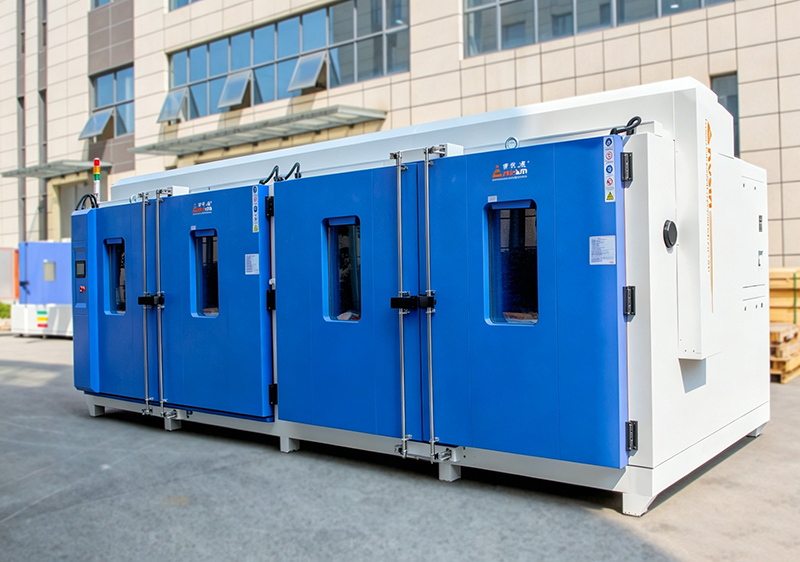
With over a decade of engineering excellence, Envsin has become a trusted partner for laboratories worldwide. Our cámaras de pruebas ambientales combine German-designed controllers, Italian compressors, and energy-saving insulation. Every temperature humidity chamber undergoes rigorous factory calibration to ensure NIST-traceable accuracy. In addition, Envsin provides full documentation, on-site training, and 24/7 technical support — so you never face downtime. Whether you need a benchtop humidity chamber for R&D or a walk-in room for mass production, Envsin delivers reliability at competitive lead times.
Final Thoughts — Mastering Environmental Simulation
Understanding how a temperature humidity chamber works empowers you to design better tests, interpret results accurately, and extend product lifetimes. From the synergy of heating and cooling to the delicate balance of moisture control, every component matters. As technologies evolve (think AI-assisted predictive maintenance and low-GWP refrigerants), Envsin remains at the forefront, helping engineers replicate any climate on earth — and beyond. Ready to optimize your reliability testing? Invest in a high-performance climatic chamber that grows with your needs. For expert guidance or a tailored quote, contact Envsin today and experience the difference precision makes.