





Over 70% of automotive component failures originate from real-world environmental stress — extreme heat, freezing cold, penetrating humidity, salt corrosion, and relentless vibration. Passing automotive environmental reliability tests (ISO 16750‑4, LV124, GMW3172) isn’t just about ticking a compliance box; it directly impacts recall costs and brand reputation. Engineers who master these tests reduce warranty claims and deliver hardware that survives the harshest road conditions. Here’s the proven roadmap.
1. Decode the test standards with precision
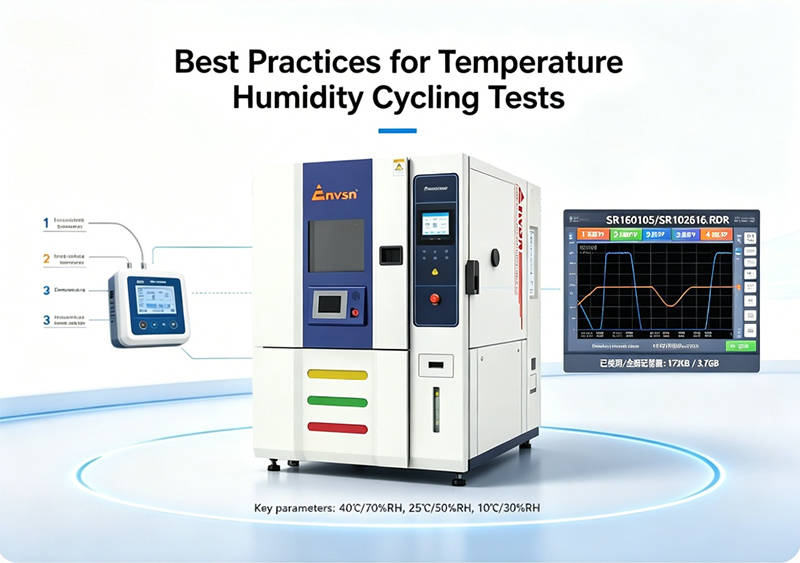
Every standard defines specific thermal profiles, humidity dwell times, and vibration envelopes. Whether you face thermal cycling, damp heat, or mixed flowing gas, you need an cámara de pruebas ambientales that executes complex step-profiles without drift. Envsin’s programmable chambers come pre-loaded with automotive cycles, eliminating programming errors. For reliable automotive environmental reliability tests, start with exact profile replication.
2. Select chambers that mirror real severity
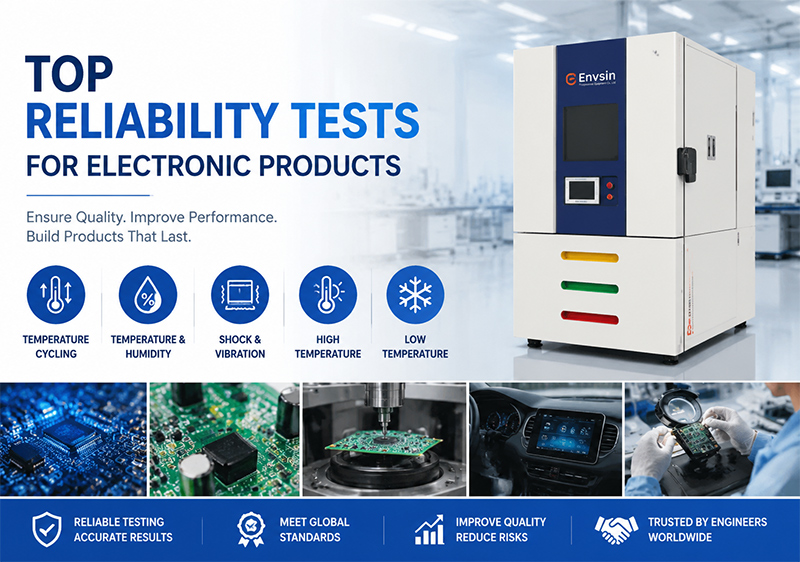
Thermal shock demands transition rates above 15°C/min to expose solder joint fatigue and material cracks. Envsin cámaras de choque térmico provide rapid two-zone or three-zone transitions, meeting IEC 60068‑2‑14. For salt-spray and corrosion resistance, uniform fog distribution is non‑negotiable — Envsin salt spray chambers exceed ASTM B117 stability requirements. Humidity + freeze tests? Envsin’s stability chambers keep ±0.3°C and ±2% RH, so your test results remain trustworthy.
3. Combine environments to catch hidden flaws
Modern automotive reliability standards increasingly require simultaneous vibration and temperature/humidity exposure. An Envsin combined environmental test chamber integrates electro-dynamic shakers with precise climatic control, replicating engine bay or underbody conditions. Multi-stress testing reveals latent defects that single-axis tests miss — loose connectors, PCB micro-cracks, and seal degradation appear before production.
4. Monitor uniformity & calibration rigorously
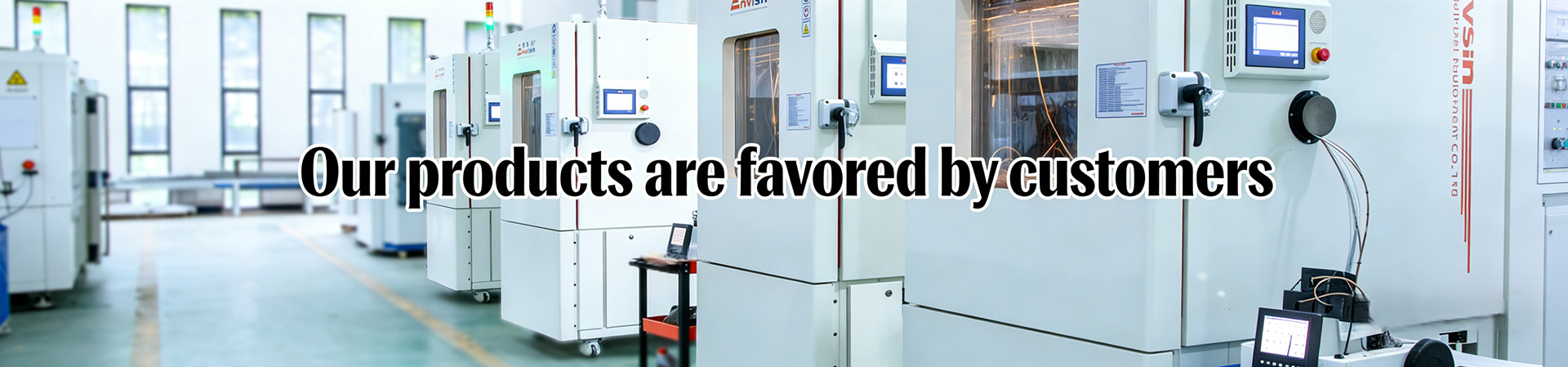
A temperature gradient of just 2°C across the workspace can invalidate weeks of testing. Envsin chambers feature high-uniformity airflow designs and built-in sensor diagnostics. Regular calibration of sensors and proper chamber maintenance ensure repeatable, audit-ready data. No more false passes or mysterious outliers.
Following these four principles — mastering standards, choosing the right chamber, combining environments, and precise calibration — transforms how you pass automotive environmental reliability tests. Instead of chasing failures, you systematically eliminate risks. Envsin environmental test chambers are built to sustain heavy-duty test schedules while maintaining accuracy year after year. Reduce field failures, protect your supply chain, and gain confidence with every test run.
Stop guessing. Start passing. Upgrade your testing approach with Envsin’s tailored solutions for thermal shock, humidity, salt spray, and multi-axis vibration. Visit www.envsin-testchamber.com to explore chambers engineered for the next generation of automotive reliability.