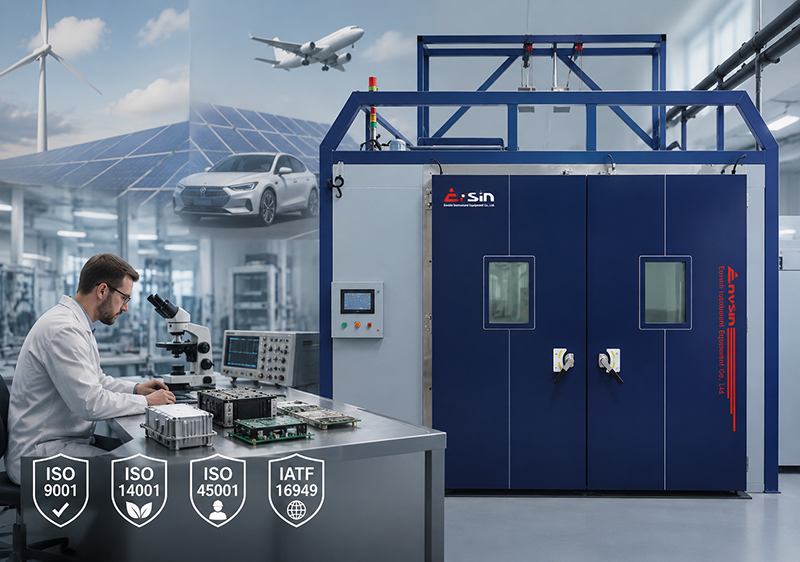






Imagine que su equipo necesita validar el rendimiento de un paquete de baterías para vehículos eléctricos, un lote de estabilidad farmacéutica o un componente aeroespacial en condiciones extremas de calor y frío. Una cámara de sobremesa simplemente no se ajusta a la escala. Necesita un entorno controlado lo suficientemente espacioso para productos de tamaño natural. cámaras frigoríficas se convierten en indispensables. Estos sistemas del tamaño de una habitación simulan las condiciones térmicas del mundo real con gran precisión, garantizando la durabilidad del producto y el cumplimiento de la normativa. Tanto si va a adquirir su primera unidad como si va a optimizar un laboratorio ya existente, esta guía le ofrece una hoja de ruta clara. En Envsin, diseñamos productos avanzados cámaras frigoríficas en la que confían ingenieros de toda Norteamérica y Europa, y le ayudaremos en cada paso.
Paso 1: Definir los requisitos de las pruebas y el perfil de carga
Antes de seleccionar un cámara a temperatura ambiente, Si desea realizar una prueba, defina con precisión sus necesidades. Considere: ¿cuál es la mayor dimensión física de su espécimen de ensayo? ¿Necesita controlar la humedad junto con la temperatura? ¿Qué velocidades de rampa son críticas para sus normas (por ejemplo, IEC 60068, MIL-STD-810)? Indique su rango de temperatura: las unidades estándar cubren de -40°C a +85°C, pero muchas aplicaciones exigen -70°C o temperaturas extremas de hasta +150°C. Calcule la carga térmica generada por el propio producto: los dispositivos alimentados emiten calor que puede afectar al rendimiento de la cámara. En Envsin, ofrecemos consultas de dimensionamiento a medida para cada especificación, garantizando que su cámara de pruebas de temperatura funciona eficazmente sin gastar demasiado en capacidad innecesaria.
Paso 2: Elegir el tipo de construcción y material adecuados
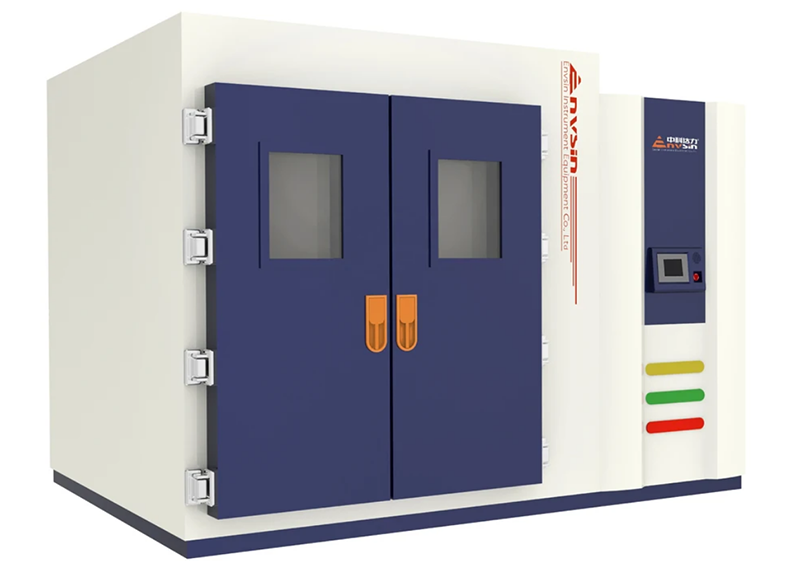
La durabilidad de un cámara a temperatura ambiente depende de su construcción. Busque interiores de acero inoxidable de calibre grueso (tipo 304 o 316) que resistan la corrosión, sobre todo cuando se realicen pruebas de humedad. Los paneles exteriores deben ser de acero con recubrimiento de polvo y aislamiento de poliuretano de alta densidad, de al menos 100 mm de grosor para mayor estabilidad térmica y ahorro energético. Envsin cámaras walk-in cuentan con sistemas de paneles modulares que permiten el montaje in situ incluso a través de puertas estándar, además de suelos reforzados aptos para cargas de carretillas elevadoras y palés. No olvide evaluar los sistemas de sellado de puertas: las juntas de silicona y los cierres de compresión evitan las fugas térmicas, un factor clave para la distribución uniforme de la temperatura.
Paso 3: Instalación y requisitos previos de la instalación
Una instalación adecuada garantiza cámara de pruebas ambientales ofrece décadas de servicio fiable. En primer lugar, asigne un espacio de suelo adecuado con espacio libre para el acceso de mantenimiento (1 metro como mínimo en todos los lados de servicio). Los requisitos eléctricos varían: la alimentación trifásica es típica de los sistemas más grandes, y Envsin proporciona esquemas eléctricos claros. Tenga en cuenta la climatización de la sala circundante: aunque la cámara es autónoma, la unidad de condensación externa (refrigerada por aire o por agua) necesita una ventilación adecuada. Nuestro equipo de ingenieros realiza estudios sobre el terreno para garantizar una integración perfecta en sus instalaciones, ya estén en Detroit, Stuttgart o Shanghai. Una instalación correcta también incluye el aislamiento de vibraciones y conductos de drenaje específicos para los modelos húmedos.
Paso 4: Dominar el sistema de control y el flujo de trabajo operativo
La actualidad cámaras frigoríficas se basan en sofisticados controladores PID con interfaces de pantalla táctil. Las cámaras Envsin están equipadas con un controlador lógico programable (PLC) con conectividad Ethernet, registro de datos y supervisión remota. Durante el funcionamiento, siga siempre una secuencia estandarizada: preacondicione la cámara a temperatura ambiente, cargue las muestras de ensayo garantizando la separación del flujo de aire (al menos 15 cm de las paredes) e inicie el perfil de ensayo. Utilice la programación de rampa/remojo para simular los ciclos de temperatura del mundo real. Para obtener resultados repetibles, aproveche los sistemas de alarma integrados que le avisan de las desviaciones. Envsin ofrece sesiones de formación presenciales y virtuales para maximizar la confianza del usuario.
Paso 5: Calibración y mantenimiento rutinario para mayor precisión
Para mantener la conformidad con ISO/IEC 17025, la calibración de su cámara a temperatura ambiente debe realizarse anualmente o según los protocolos de calidad internos. La calibración verifica la uniformidad de la temperatura (normalmente ±2 °C o mejor) y la precisión del sensor. El mantenimiento diario incluye la inspección de las juntas de las puertas, la limpieza de las bobinas del condensador y la comprobación de los niveles de refrigerante. Para las cámaras de humedad, utilice agua purificada para evitar la acumulación de minerales. Envsin ofrece contratos de mantenimiento preventivo con técnicos certificados que conocen los entresijos de las cámaras térmicas, lo que minimiza los tiempos de inactividad imprevistos. Lleve un registro de todas las actividades de mantenimiento, lo que también prolongará la vida útil de la cámara más allá de los 15 años.
Paso 6: Integridad de los datos, conformidad y supervisión avanzada
En los sectores regulados (farmacéutico, productos sanitarios), su cámara a temperatura ambiente deben cumplir la norma 21 CFR Parte 11 o requisitos similares de registro electrónico. Las cámaras Envsin se integran con sistemas SCADA y proporcionan registros de auditoría seguros, alertas por correo electrónico en tiempo real y sensores redundantes. Además, mediante los cuadros de mando IoT, los ingenieros pueden supervisar varias cámaras desde una interfaz central. Este paso garantiza que cada prueba esté totalmente documentada, lo que ayuda a su departamento de calidad a superar sin problemas las auditorías reglamentarias. Considere la posibilidad de añadir refrigeración redundante para aplicaciones críticas: los sistemas de doble etapa de Envsin garantizan un funcionamiento continuo incluso durante un fallo del compresor.
Por qué Envsin lidera la innovación en cámaras de temperatura walk-in
Elegir al fabricante adecuado es tan crucial como seguir las mejores prácticas. Envsin se especializa en cámaras frigoríficas adaptados a sus parámetros de ensayo exclusivos. Nuestras ventajas incluyen:
- Diseño energéticamente eficiente: Los refrigerantes ecológicos y los compresores accionados por inversor reducen los costes de electricidad hasta 30%.
- Apoyo global: Equipos de asistencia técnica nativos en inglés con logística rápida de piezas de repuesto en toda Europa y América.
- Personalización: Desde versiones antideflagrantes para materiales peligrosos hasta sistemas en cascada para temperaturas ultrabajas.
- Entrega rápida: Cámaras modulares estandarizadas con plazos de entrega de 4 a 6 semanas, totalmente probadas antes del envío.
Entre nuestros clientes se encuentran desde centros de I+D de Fortune 500 hasta laboratorios de pruebas independientes, que confían en Envsin para cámaras de ensayo térmico que combinan ingeniería de precisión con robustez industrial. No solo vendemos cámaras, sino que colaboramos en el éxito de sus pruebas.
Reflexiones finales: Su hoja de ruta hacia la excelencia en las pruebas
Implantación de una cámara a temperatura ambiente implica una planificación técnica, pero con el socio adecuado y un enfoque sistemático, obtendrá una capacidad inigualable para validar productos a gran escala en condiciones extremas. Desde la definición de las especificaciones de carga hasta el aprovechamiento del mantenimiento inteligente, esta metodología paso a paso minimiza el riesgo y maximiza la rentabilidad de la inversión. ¿Está listo para actualizar o ampliar su infraestructura de pruebas medioambientales? Póngase en contacto con el equipo de Envsin para una consulta y diseñemos la solución ideal para sus productos de próxima generación.