





Imagine moving a critical electronic assembly directly from a -65°C freezer into a +150°C oven within seconds. That brutal transition is exactly what a cámara de choque térmico does — and it can expose hidden weaknesses that gradual temperature cycling might miss. For quality managers and reliability engineers, selecting the right equipment is a decision that directly impacts product lifespan and safety. But with so many specifications on the market, what really matters? Let’s break down the essential features that separate a dependable thermal shock chamber from one that will cost you time and repeat tests.
1. Two-Zone versus Three-Zone Configuration
The architecture of a thermal shock chamber defines its efficiency. Two-zone chambers use a single basket that moves between separate hot and cold zones, offering fast transfer times — often under 10 seconds. This design excels for high-volume testing of smaller components. Three-zone chambers, on the other hand, incorporate a middle ambient zone where the product rests before moving to the opposite extreme. This eliminates condensation and reduces moisture ingress, making it ideal for sensitive electronics or sealed devices. Depending on your application, both styles have merits, but ensure the chamber’s temperature recovery time matches your test standards like MIL‑STD‑883 or IEC 60068-2-14.
2. Temperature Range and Recovery Speed
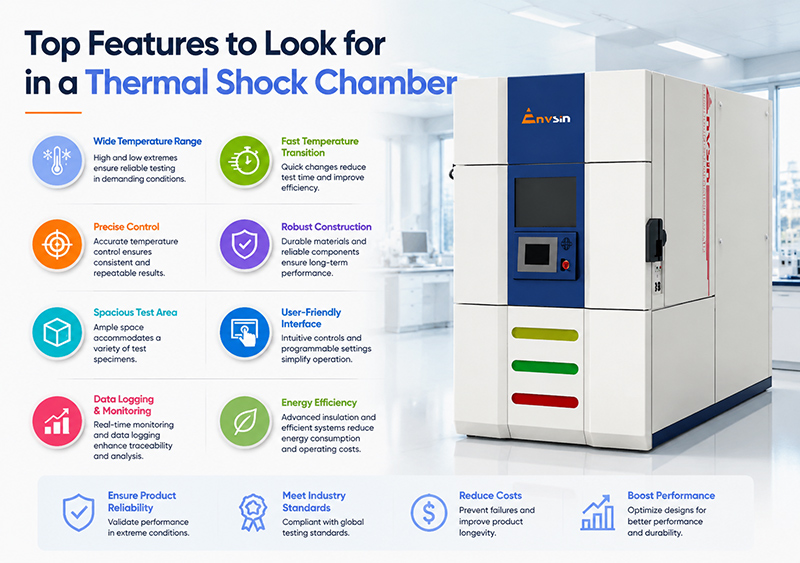
A robust thermal shock chamber must achieve extreme endpoints without drifting. Look for a range of at least -65°C to +150°C, which covers most military, automotive, and aerospace requirements. However, range alone isn’t enough; recovery time is the hidden hero. After the basket moves, the chamber should return to its set point within five minutes or less. Slow recovery invalidates test results and stretches cycle times. Top-tier models from manufacturers like Envsin guarantee rapid thermal recovery, ensuring each shock cycle is both repeatable and accurate.
3. Temperature Uniformity and Stability
Even minor temperature gradients across the test zone can create false pass or fail results. When evaluating a thermal shock chamber, check the published uniformity specification — ideally ≤2°C across the workspace. Stability matters as well: the chamber should maintain the set temperature without oscillation, especially during dwell phases. Ask for validation data or a thermal map report. Reputable suppliers provide this information upfront, giving you confidence that every corner of your product experiences the same stress.
4. User-Friendly Control and Data Logging
Modern thermal shock chambers integrate programmable logic controllers with touchscreen interfaces. Look for features like multi-step programming, real-time graphing, and remote monitoring via Ethernet or USB. Data logging is critical for compliance: you need to export cycle histories, temperature curves, and alarm records. Some systems even offer smartphone alerts for test completion or deviations. Easy-to-use software reduces operator error and documentation headaches during audits.
5. Build Quality and Energy Efficiency
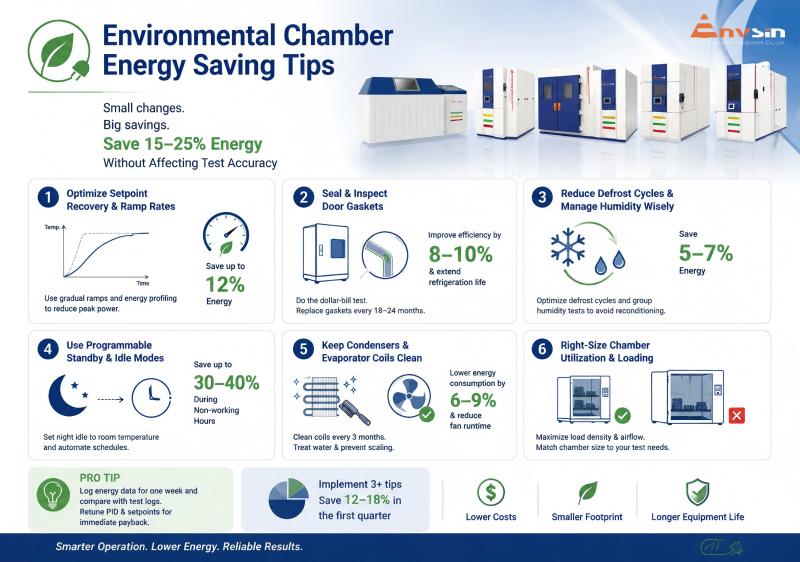
A thermal shock chamber runs continuously for hours or days, so durability matters. Stainless steel interiors resist corrosion, while high-density insulation minimizes heat loss and external surface temperature. Energy efficiency translates to lower operating costs over the chamber’s lifetime. Look for efficient refrigeration systems using eco-friendly refrigerants and variable-speed compressors. Envsin’s thermal shock chambers, for example, are designed with reinforced construction and optimized airflow, keeping utility bills reasonable without compromising performance.
6. Safety and Compliance Certifications
Never overlook safety features: over-temperature protection, door interlocks, and pressure relief valves are mandatory. Additionally, the chamber should comply with international standards such as CE or UL. If you serve aerospace or defense clients, request documentation that verifies the unit can repeatedly meet MIL-STD-810 or RTCA DO-160 profiles. Compliance isn’t just a checkbox — it’s proof that your testing equipment can be trusted for mission-critical components.
7. After-Sales Support and Calibration Services
Even the best hardware requires periodic calibration and maintenance. Before purchasing, evaluate the manufacturer’s support network. Can they provide on-site calibration? How quickly can they ship spare parts? A thermal shock chamber is a long-term investment, and responsive technical support reduces downtime. Many leading brands, including Envsin, offer global service coverage and training sessions to help your team maximize the chamber’s capabilities.
Choosing the right thermal shock chamber comes down to balancing technical specifications with real-world usability. Prioritize recovery speed, uniformity, and build quality, but don’t forget the importance of user-friendly controls and dependable support. Whether you’re testing PCBs, battery cells, or sealed connectors, a well-chosen chamber delivers consistent stress screening and accelerates product validation.
Envsin (www.envsin-testchamber.com) specializes in thermal shock chambers that marry precision engineering with intuitive operation. From two-zone economical models to high-performance three-zone systems, each unit undergoes rigorous testing before delivery. If reliability is your priority, start by comparing these seven features — and never settle for less than what your product’s lifecycle demands.