





During a recent validation campaign for a 4680 cylindrical cell module, an engineering team observed accelerated capacity fade after only 120 thermal cycles between -40°C and +85°C. The failure root cause was traced to micro-cracks in the separator layer induced by non-uniform temperature ramp rates — a classic risk in EV battery testing that standard thermal cycling profiles often overlook. For applications demanding precise stress screening, Envsin and its advanced Envsin environmental test chambers are engineered to reproduce real-world thermal gradients with repeatable accuracy, helping battery developers uncover degradation mechanisms before they reach production.
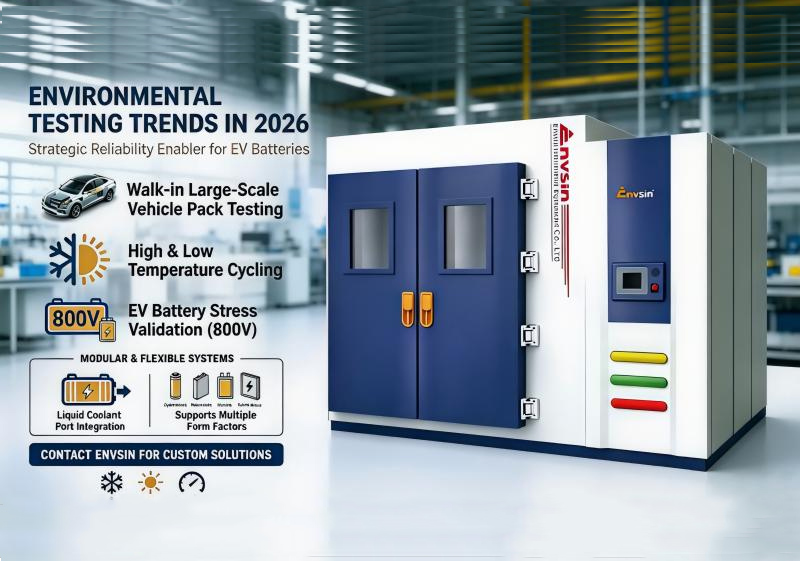
As electric vehicle platforms migrate toward 800V architectures and cell-to-pack designs, environmental testing evolves from a regulatory checkpoint into a strategic reliability enabler. In 2026, engineering teams across Europe and North America face intensified pressure to validate battery safety, longevity, and performance under extreme climates. The shift toward standardized yet customized test profiles defines how R&D departments, quality managers, and testing laboratories prioritize equipment investments. Three dominant trends are reshaping the landscape: high-voltage thermal shock correlation, real-time drive-cycle climatic replication, and accelerated aging models for second-life battery assessments.
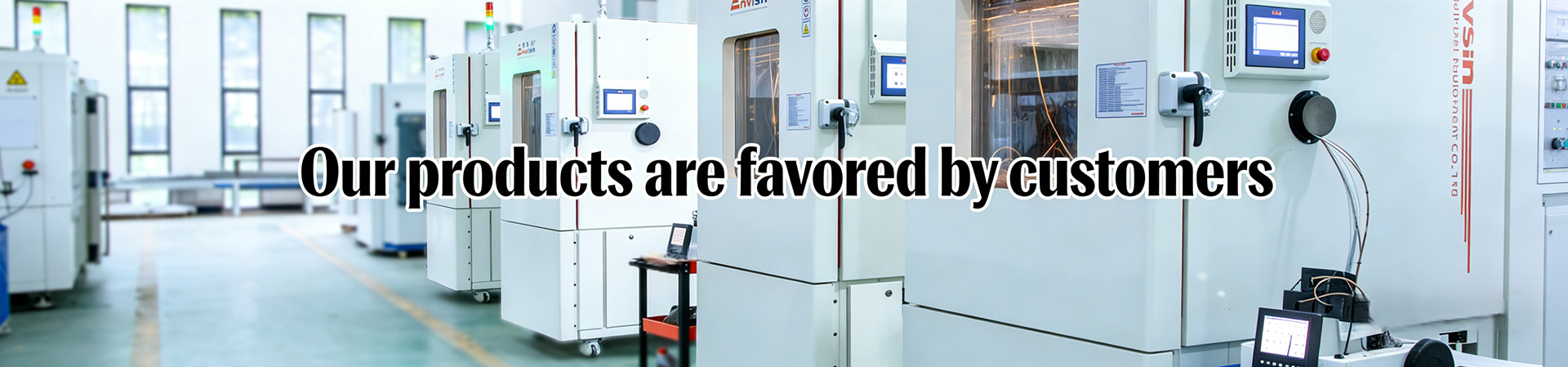
First, the adoption of synchronized mechanical and thermal stress tests is accelerating. Battery reliability testing now often combines vibration with rapid temperature variations to simulate on-road conditions inside an thermal shock chamber. Traditional two-zone or three-zone thermal shock chambers must provide transition times below 10 seconds without overshoot — a critical requirement for detecting contact fatigue in welded busbars and interconnects. Envsin’s thermal shock systems deliver consistent change rates compliant with IEC 60068-2-14 and tailored EV standards such as LV124 and VW80000, ensuring failure modes like loose terminals or cracked cell housings are identified early.
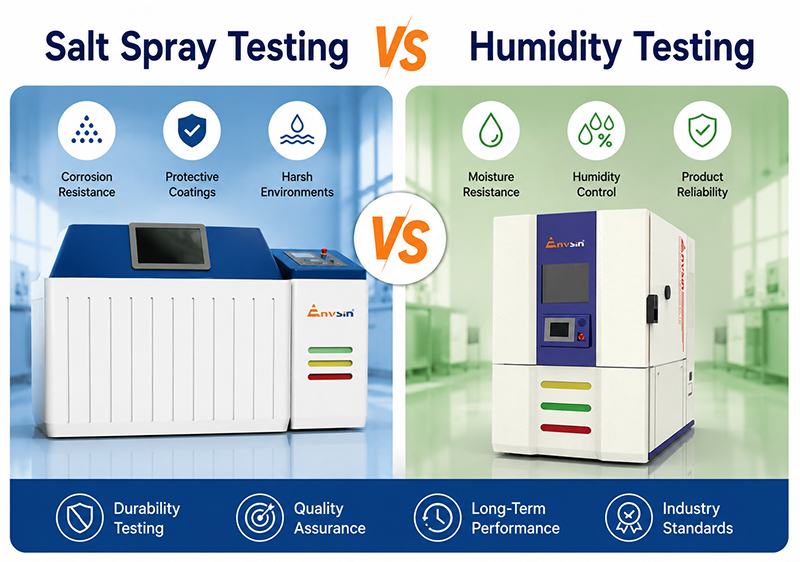
Second, the growing complexity of battery management system (BMS) validation drives demand for multi-functional temperature test chamber configurations. Modern temperature test chambers are integrated with CANoe, dSPACE, or battery cyclers to simulate environmental conditions while logging voltage and temperature at cell level. In 2026, leading test houses expect chambers to support active humidity control (10% to 98% RH) and altitude simulation up to 5000 meters for pack-level evaluations. Envsin offers modular temperature humidity chambers that interface directly with external data acquisition systems, eliminating signal drift and enabling high-fidelity reproducibility of standards such as SAE J2464 and UN R100.03.
A third trend is data-driven predictive testing, where results from climatic chambers feed physics-based degradation models. Rather than running lengthy calendar aging tests, engineers design sequences using measured temperature gradients from real-world drive logs. This approach reduces test duration by up to 40% while maintaining statistical confidence. However, it requires chambers with dynamic ramp rate programming and seamless reporting interfaces. Envsin’s rapid temperature change chambers support complex multi-step profiles with ramp rates up to 15°C/min, ideal for battery pack qualification under WLTP or US06 cycles.
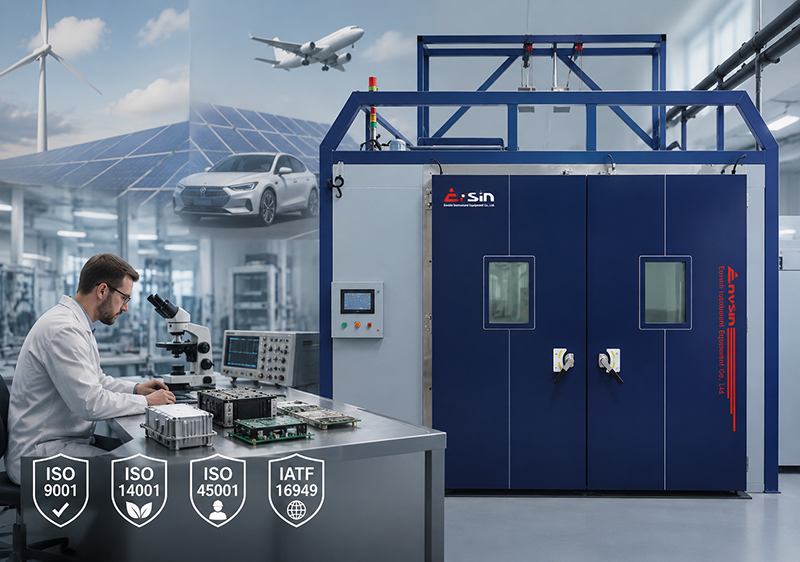
For battery developers handling multiple form factors — from prismatic to pouch and cylindrical — flexibility becomes non-negotiable. The rising use of liquid-cooled battery modules demands chambers with feedthrough ports for coolant lines and integrated thermal management simulation. Envsin walk-in chambers and customized reliability testing systems are built to accommodate full battery packs, power electronics, and even hybrid test setups with integrated dynamometers. With an engineering team experienced in tailoring solutions to unique test requirements (including explosive venting provisions and gas monitoring), Envsin aligns with the 2026 push for modular, scalable environmental test infrastructure.
As validation schedules tighten and safety standards grow more rigorous, selecting the right environmental testing partner directly impacts time-to-market and field failure rates. Envsin invites EV battery manufacturers, automotive engineering groups, and independent test labs to discuss your specific EV battery testing challenges — whether that means replicating thermal shock on a 800V pouch module or stabilizing humidity during a 1000-hour durability run. Envsin provides fully customizable environmental testing solutions tailored to international standards, battery types (cylindrical, prismatic, pouch, solid-state), and extreme test conditions.
Reach out to the Envsin engineering team to strengthen your battery validation and reliability programs for 2026 and beyond.