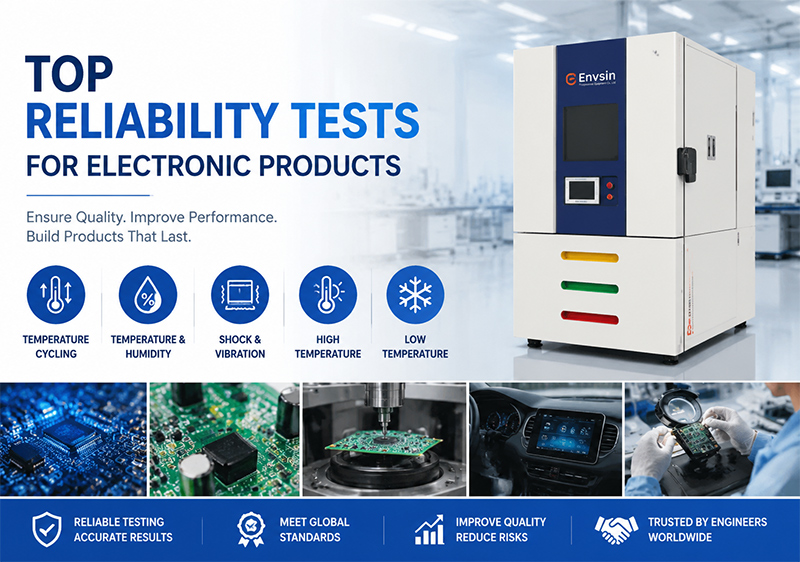







You spent months perfecting your PCB design, sourcing components, and tuning firmware. But what happens when that automotive controller bakes under a Nevada sun at 85°C or endures the freezing cold of a Minnesota winter? Nearly 35% of electronic field failures result from environmental stress — thermal swings, moisture ingress, or mechanical vibration gradually weakening solder joints and insulation. That’s why leading engineering teams don’t just rely on basic functional checks. They implement proven reliability tests to uncover weaknesses before mass production. Envsin delivers high-performance environmental test chambers that simulate years of real-world abuse within weeks, helping you release electronic products that truly survive the field.

1. Temperature Cycling — The Silent Defect Detector
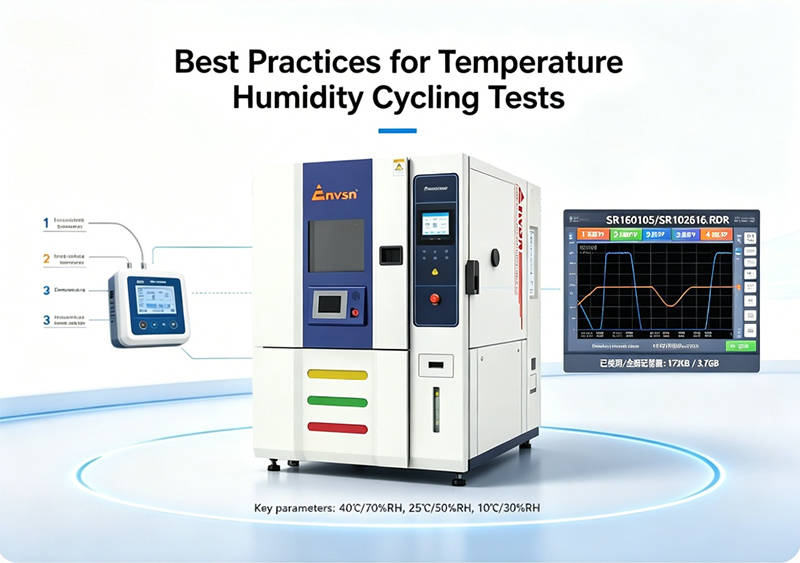
Thermal expansion and contraction are relentless enemies of modern electronics. Repeated transitions between extreme low and high temperatures (e.g., -40°C to +125°C) expose mismatches in materials — cracked ceramic capacitors, lifted copper traces, and intermittent solder ball fractures become obvious. The temperature cycling test, referenced in standards like JESD22-A104, is a cornerstone of reliability tests for electronic products. Envsin’s temperature cycling chambers offer programmable ramp rates, rapid recovery, and uniform airflow, ensuring each cycle matches your test profile without deviation. By identifying marginal failures early, you drastically reduce warranty returns.
2. Damp Heat / Humidity Testing — Corrosion and Leakage Revealed
Humidity combined with heat accelerates electrochemical migration and dendritic growth. The classic 85°C / 85% RH test remains one of the most revealing reliability tests for evaluating insulation resistance and protection coatings. Without stable control, even conformal coatings can fail. Envsin’s environmental test chambers maintain precise humidity levels over weeks of continuous operation, preventing condensation drift. Running damp heat testing early in design helps you verify that connectors, IC packages, and seals resist moisture ingress — especially critical for outdoor or automotive electronics.
3. Thermal Shock — Extreme Transition for Rugged Components
While temperature cycling changes conditions gradually, thermal shock exposes devices to near-instantaneous swings between hot and cold zones (for example, from -55°C to +125°C in under 10 seconds). This brutal test mimics rapid environmental changes such as a device moving from an air-conditioned room into desert heat or sudden altitude shifts. Thermal shock often reveals hidden delamination, hermetic seal leaks, and substrate cracks that would otherwise slip through. Envsin thermal shock chambers feature dual or triple zones, designed to meet MIL-STD-883 and IEC standards. When you need to certify ruggedized electronic products, this test is non-negotiable.
4. Vibration and Combined Environment Testing
Vibration alone can loosen fasteners or cause resonance fatigue, but the real world throws simultaneous stressors: heat, humidity, and shaking all at once. Combined environment testing (temperature + humidity + vibration) replicates transportation or engine bay conditions more faithfully. According to HALT/HASS methodologies, exposing electronic products to multi-axis vibration while thermal cycling uncovers intermittent connection issues and mechanical resonance failures. Envsin offers customizable chambers with integrated vibration interfaces or slip tables, allowing you to run truly realistic profiles. For mission-critical systems, skipping combined stress is a risk few can afford.
5. Additional Considerations: Altitude, Salt Spray & More
Depending on your end application, other reliability tests might be mandatory. Low-pressure (altitude) testing ensures drones or avionics function at high elevation; salt spray verifies coastal resistance. A robust reliability program often pairs these with thermal cycling. Yet the core foundation always remains a precise, repeatable environmental test chamber. Envsin’s product line spans from benchtop units to walk-in rooms, supporting flexible configurations for labs of any size.
Implementing these reliability tests early in your development lifecycle isn’t just about passing certification — it directly translates into lower field failure rates, stronger brand reputation, and reduced liability. Whether you need temperature cycling, thermal shock, or combined environmental simulation, the accuracy and durability of your test equipment determine whether you catch defects or ship them to customers. Envsin provides robust, CE-compliant chambers trusted by engineers worldwide. Visit www.envsin-testchamber.com to explore models, request a quote, or download technical datasheets. Don’t let environmental surprises ruin your product launch — validate with Envsin.